

Using the 6 W’s to Measure R&D and Innovation
“What cannot be measured cannot be managed”. The pressure to measure the results of innovation is gaining ground, but has been a challenge for many innovation managers. To get past this challenge, Caspar van Rijnbach suggests using the six W’s to define the right measurements for you.
From Fixed to Flexible Lives
A major shift is underway from fixed to flexible lifestyles, from commute to communicate forms of consumption. The Millennials or Generation Y are at the heart of it, both by choice and necessity; but the impacts will be felt far wider as new technologies enable a more flexible, pick and mix approach to life and work.
The Missing Ingredient of Crowd-based Idea Generation
With the growing popularity of open innovation, crowdsourcing and web-based suggestion schemes where the best ideas are decided by popular votes, many of us tend to forget a very simply truism: creative people do not follow the crowd. At minimum, they do their own thing. At best, they lead the crowd.
Cognitive Biases Inhibiting Innovation in Top Management Teams
The top management team of an organization is arguably the most important team for deciding and implementing innovation strategies. They typically decide which markets to be entered, which markets to be exited, and which new technologies to pursue. But decision making is fraught with biases – errors in judgment that affect the quality of decisions. Sometimes with devastating results. In this post we will see how basic human psychology affects the decision making of top management teams.
Core Competence Management in the Era of Open Innovation
“Core competences” are a major concept in managing innovations and technologies. In the era of Open Innovation, the established concept of core competence management needs to be updated. innovation-3’s Frank Mattes recently met with a group of 20 innovation / technology managers from leading firms to work out how this could be done – with the practitioner’s perspective in mind. In this article you will find the key results of the discussion.

Pulp Innovation Chapter LXX: What if the Scenario is Wrong?
When concerns are raised that Accipiter's scenarios might be wrong or perhaps placing too much emphasis on the wrong market, Marlow must step in to provide encouragement. The point of scenarios isn’t necessarily to be able to predict the actual future, but to identify discontinuities and anticipate them, and bring new needs or opportunities to light.
5 key Success Factors to Enable Transformational Innovation within Businesses
Transformational innovation for many businesses is inherently complex and, in many cases, high risk. It can be a big distraction, expensive in terms of cost and resource bleed from other key activities, must be managed carefully and will frequently not be successful. This article explores some key factors to work with when looking for transformational innovation.
Healthy and Sustainable Tourism
In a global world, we can travel for leisure to practically any part of any country, if we have the money and the time. Our expectations of how, where and why we travel continue to change as technology allows us to plan, connect, share and experience destinations in new ways. Yet, travel brings with it health risks for us and increased risk of disease spread. Emerging technologies also signal new ways of thinking about tourism, and the potential to allow us to have rich, immersive tourist experiences without leaving home - with the added benefit of reducing health risks.
Depicting the Intent Behind Collaborative Innovation: the Grid
Intent guides the practice of collaborative innovation. What problem do we want to solve? What possibilities do we want to explore? In introducing his blueprint for collaborative innovation, innovation architect Doug Collins suggested applying the Balanced Scorecard as a simple, visual approach to start the conversation around intent. Recent practice with clients has him revisiting this guidance. This article presents his latest thinking.
Pulp Innovation Chapter LXIX: The Foursight Model
Scenario Planning never fails to identify one or two people who seemed promising on the surface but can’t, or won’t, extend their minds into more ambiguous situations. When Marlow and Susan discover that a member of their innovation team is uncomfortable in her position and holding the team back, they discuss how to assign the ideal role for each employee.
Innovate Like Famous Explorers
Innovation nowadays has many similarities with voyages of discovery in the past. In this blog Gijs van Wulfen walks us through practical learnings for innovation inspired by successful explorers.
Food Packaging: Less is Sometimes More!
Food packaging has often focused on two primary consumer aspects; convenience and preserving the quality of the food. Consumer’s environmental and health concerns and corporation’s supply chain and energy cost goals are driving innovation in food packaging; creating a growing demand for changes.
Designing the Perfect Ideas Competition
What's the most effective way to design an idea competition that doesn't just result in a huge pile of ideas, but enables teams to implement ideas that will help to make your organization more creative? Jeffrey Baumgartner shares one practical framework for making this happen.
Open Innovation: Beiersdorf’s Intimate Approach to External Partnerships
Michael Fruhling rececently spoke with Dr. Horst Wenck, Beiersdorf's Corporate VP of R+D, about his company's approach to open innovation. One key is its OI web portal, which carefully cultivates a qualified set of external partners. Once a relationship is established, Beiersdorf forms a 'project house,' where qualified partners are deeply immersed in its current technical needs and challenges and the corporate intelligence it has gathered to support its OI priorities.
How to Change Innovation Culture the Fast & Viral Way
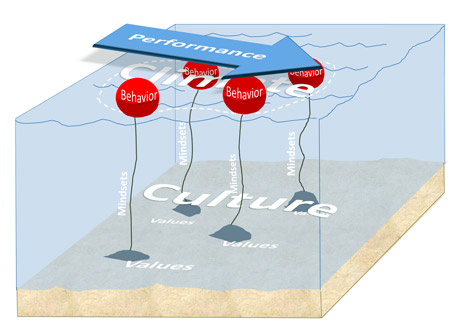
There are different approaches to facilitating cultural change within an organization in order to promote innovation. Bengt Järrehult argues that the viral change, whereby successful changes are achieved through experimentation and then spread by different groups copying or adopting the change leads to faster and more long-lasting culture change.
New Series of Articles on the Risks Faced by Innovation Projects
Every innovation project starts from an idea or a problem and mostly, all innovation teams do jump immediately to the feasibility study and scenario analysis dedicating little or no time to the assessment of the risks of innovation projects. This series of article represents an extended dashboard of internal, external and hidden risks of such projects in aiding innovation teams throughout their risk management activities. The first article looks deeper into what drives a successful innovation eco-system.
Pulp Innovation Chapter LXVIII: The Importance of Trend Spotting
Just when the Accipiter innovation team is finally ready to start scenario planning they realize that no one on their team understands any of the trends that might shape the future of their industry. How will they find the demographic, technological, governmental and social market trends?
Hanging Gardens of Metropolis
Cities have long attempted to bring the rural into the urban, whether the Hanging Gardens of Babylon or Singapore’s new Gardens by the Bay, but urban agriculture is increasing with green roofs and other forms of urban farming as the population of cities continues to expand. Based largely on the theories of Dickson Despommier, architects have been designing the ultimate in city-based agribusiness, vertical farms inside of high rise buildings which some have dubbed plantscrapers.
Re-envisioning Client-Agency Engagement through Collaborative Innovation
The Digital Age disrupts the practices and beliefs that gird the archetypical relationship between advertising agency and client. The Procter & Gamble Companies discarded a relic of the client-agency relationship, the creative brief. They seek more authentic engagement that leads to more compelling campaigns. What possibilities do clients open when they move from exchanging information to engaging in co-creation? What role might the practice of collaborative innovation play in redefining roles between client and agency?
Pulp Innovation Chapter LXVII: For Every Problem…
When one of the team members expresses concern about his ability to balance the demands of his regular work with those of the innovation project, Marlow is quick to respond. Will the team be satisfied so that the innovation work can continue?
Open Innovation: External Partnership Best Practices
A couple of years ago, it seemed that everybody in the external innovation business aspired to be "partner of choice." That is, they wanted to be the company that external partners would preferentially approach with unsolicited new opportunities. Michael Fruhling is pleased to report that a number of companies have really stepped up their external partnering "game."
Expertise and its Role in Innovative Problem Solving
The nature of problems in innovative work is that they are often ill defined, novel to the individual who engaged them, and complex in that often several solutions exist to the same problem. In this post we will see how expertise is an important factor in innovative problem solving, and how leaders and organizations can cultivate R&D team expertise.

How to Make Business Model Innovation Happen
One of many good reasons for you to focus on your business model is that companies focusing on Business Model Innovation outperform their industry peers in terms of operating margin and total shareholder return. In this in depth article Marc Sniukas provides you with a framework to describe your business model in three easy steps; a process to start and drive Business Model Innovation within your company and an overview of tools and how they can be used in Business Model Innovation.
Pulp Innovation Chapter LXVI: Find the Key Focus Area
With Accipiter's new innovation team and communications under way, Marlow sets out to establish their first focus area. In this case the pressure provided by their competitors' advantage turns out to be a guiding light.