

Four of Five Social Innovators Recommend…
Gartner predicts that four of five large enterprises that pursue social innovation with their employees and the world at large will, over the next couple years, fail in their endeavors. Ouch. Meatloaf gave better odds. In this article innovation architect Doug Collins explores how you might increase the odds of gaining a coveted membership to the twenty percent club.
Packaging Innovation in the Digital Age: a Smarter User Interface?
Packaging is already a concentrated form of brand communication, expertly coded by designers using form, materials, colors and symbols to tell a brand story; or to make an innovation approachable and understandable. Now that packaging is becoming part of the digital revolution, how can we best enhance its communication potential?
The Supremacy of Innovation
Successful programs like TQM, Balance Scorecard and Six Sigma dramatically improve quality and performance. They are designed to rightfully calibrate the hard asset issues of production. There is a serious lack of three dimensional modeling for soft issues, like innovative thinking and the dimensions of the core vision itself enveloping all production issues. These image supremacy rules challenge current methods and offer checklists to assess the need of newer, softer and special agenda-centric approaches.
The Persuasive Innovator: Influencing People to Collaborate
When you introduce the practice of collaborative innovation to your organization, you make the case to your colleagues that the approach will benefit them more than the status quo. Why might they agree with you? Why might they change their beliefs and behaviors? Have you developed your campaign of persuasion? Innovation architect Doug Collins shares his thinking on how you might influence people to share your beliefs about the benefits of the practice.
How to Effectively Manage the Fuzzy Back End of Innovation
You have doubtless heard of the fuzzy front end of innovation. It is another name for idea generation. But Jeffrey Baumgartner believes that the back end of innovation, where implementation is supposed to take place, is just as fuzzy. Many companies lack clear, efficient processes for implementing the ideas they generate.
How R+D Can Build Marketing Support for its Ideas
Last week, we introduced the topic of R&D's frequent lack of marketing support for its ideas and some culturally ingrained attitudes that can contribute to this. This communication gap is frustrating, especially for those in R&D whose role it is to develop and sell-in new initiatives. This week, we continue this discussion and describe strategies to help overcome resistance.

PowerPoint Makes us Stupid: Never Mind the Slides, Here’s the World Café
People who work in the nuclear power industry track their lifetime exposure to radiation as a function of the maximum allowed by law. If only a benign regulatory agency would set limits for exposure to PowerPoint presentations. Lamentably, many would learn that they have exceeded the lethal dose. In this article innovation architect Doug Collins explores a better way: one that marries the best that the virtual form of collaborative innovation can offer with the long-standing, effective approach of hosting an in person World Café.
Why Marketing Doesn’t Want R+D’s Ideas – and what to do about it
One of the most common frustrations expressed by R+D professionals is that marketing lacks interest in their ideas. Why is this often the case, and what can be done about it?
Establishing the Foundations for a Balanced Innovation Portfolio
Corporate innovation programs can’t fulfill their potential without the right foundations in place. Many organizations are taking their programs across the enterprise. In this article we consider three key foundations and how they can be boosted to improve corporate innovation: the linkage between every day innovation and corporate targets, the levels of openness, trust and acceptance of diverse opinions.

Creating the Conditions for Sustainable Innovation
Is your company a great place for innovation? That probably depends on whether you ask the boss or the underlings. According to a new study by Development Dimensions International, a human resources consulting firm, the boss and the workers could hardly disagree more. Read more and download the report that does recommend some practical action steps that can be used to help bridge this disconnect between leaders and employees.
Threat vs. Opportunity – The Art of Pitching your Ideas
Why is your boss neglecting the fantastic idea you came up with even though it looks promising (in your eyes at least)? And why is your boss so intent on avoiding negative situations? This is an irritating behavior many of us have experienced and one that Bengt Järrehult examines more closely in today’s blog.
A Lesson for Building your New Business Opportunity Case
Many would-be innovators share a common frustration: persistent difficulty in gaining traction for their new ideas with the people they need to cultivate in order to advance them. Why do they often struggle? There are numerous reasons, but a common one is that they all too often rely on opinions to make their case instead of applying facts and data.
Conflict in Teams – Does it Stimulate Creativity & Innovation?
Conflict is a dreaded word. Most people associate conflict with interpersonal clashes ranging from inelegant avoidance tactics in the breakroom to fierce and open hostility. Surely, it is obvious that conflict in teams is detrimental to creativity and innovation. But is it? In this post we will explore this matter further and see when conflict sometimes can enhance the creative thinking skills of teams.
Creativity: Why it’s Better to Turn your Problems into Goals
When it comes to creative problem solving, which is more effective? Focusing on the problem at hand, or on setting goals for what we'd like to accomplish? Jeffrey Baumgartner explores this perplexing question and comes to a very clear conclusion.
Why HR and Finance will Love Collaborative Innovation
It’s good to have friends in high places as you transform the world through the practice of collaborative innovation. In this article innovation architect Doug Collins introduces you to your buddies in human resources and finance. Say hello!

Pulp Innovation Chapter LXV: The Communication Factor
Any experienced consultant knows that effectively communicating the goals, purposes and outcomes of an innovation effort to the workforce is vital to the project's success. Can Marlow manage to convince Accipiter's management of the importance of their communication plan?
The Team Diversity Sweet Spot
Team diversity is conducive to innovation. When R&D project teams are composed of people with different skills, competencies and knowledge, the likelihood for new thinking and innovative solutions increase. However, too much diversity may lead to breakdown in communication and ensuing conflict. There is a sweet spot in how much diversity R&D teams should have.
New Literacies Needed?
Increasingly, many Western societies face a ‘double whammy’: simultaneous high levels of youth unemployment and skills shortages. But it is not just formal and traditional skills that are needed; ‘new literacies’ from the digital to real world, verbal to visual, scientific and financial are being highlighted as critical to our futures. New literacies could be seen as little more than rebranding of old ideas, but in doing so it may focus attention and garner momentum for change and new solutions for our new economies.
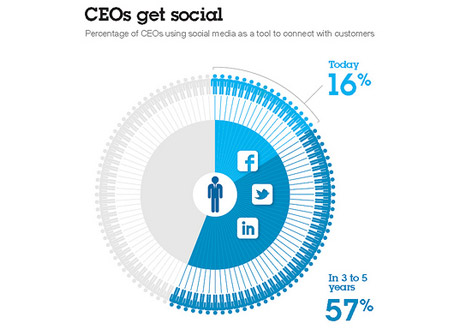
IBM CEO Study: Openness by Social Media Is Key Enabler to Organizational Success
According to the IBM CEO study conducted amongst 1,700 CEOs from 64 countries and 18 sectors, Open CEOs' identify openness enabled and supported by social media and technologies, as a major influence on their organization and its success. These organizations perform better because they are utilizing the collective intelligence, are more agile, able to act quickly to gain higher profitability and growth.
Reimagining Media & Entertainment through Collaborative Innovation
Established firms in the media & entertainment space struggle to prosper in the Digital Age. New business models, enlivened by technology, erode traditional sources of profit. What possibilities for reimagining the business exist? In this article, innovation architect Doug Collins suggests one avenue to pursue: consider the benefits that come from learning how to convene a community on the critical question by embracing the practice of collaborative innovation. Apply the practice to help people work to their potential.
Breaking Language Barriers
Learning a foreign language is exceedingly difficult for many people, but digital technology is making modest translations of text and voice faster, easier, and more accessible. Machine translators (MT) have been around for years, but the level of availability and their quality continue to rise. They promise to cost-effectively unite the world even more than before with a variety of applications from tourism and social collaboration to business and politics.
Product Innovation: Unifying People, Processes and Tools
Product innovation is not simply about generating new ideas. It is a complex process, and many organizations struggle with the design and implementation of an effective innovation strategy that yields measurable results over the long-term. Sustained growth and profitability can be achieved through the integration of three critical levels: People, processes and tools.
Does Your Organization Have Innovation Harmony?
Innovation is inherently multidisciplinary. Successful innovation requires harmony; that is, a high degree of communication, collaboration and cooperation. This article explores what is meant by innovation harmony and how to go about achieving it.
Recasting the Internal Communications Group’s Charter through Collaborative Innovation
Organizations fund internal communications groups to develop and disseminate the central narrative for the group. Changes wrought by the Digital Age have usurped this group’s role as the exclusive interpreter and messenger for intra-firm information, however. In this article, innovation architect Doug Collins advocates that internal communications reframe and refresh its charter by embracing the practice of collaborative innovation in order to facilitate engagement amongst staff.