


How to Build a Lean High Performance Innovation Team
The world we live in is changing at a dizzying rate and sectors including energy, technology, entertainment, communications, finance, sports, manufacturing and engineering are all experiencing shifts on a seismic scale. Many of the innovative advances of the past ten years, from smart phones to digital cameras have become commoditised and creativity has become the currency of success. In this article author Matthew Griffin shows how large and small organisations alike can build lean, agile, high performance innovations teams and bridge any shift successfully.

How to Increase Engagement in Enterprise Innovation and Develop a Sustainable Program
Maintaining and building high-quality engagement over time should be the focus of all innovation managers as they strive to develop sustainable enterprise programs. This article shares key activities you can undertake in order to boost engagement with your program.

The Secret of Innovative Companies: It Isn’t R&D
In rejecting the limiting belief that innovation is R&D’s job alone, leaders of highly innovative companies work hard to instill “innovation is everyone’s job” as a guiding organizational mission. In this article, co-creators of Innovator’s Accelerator, Jeff Dyer and Hal Gregersen share insights and examples to follow in order to ensure innovation starts at the top and reaches the bottom of your organization.
Unlocking Talent is a Key to Organizational Agility and Innovation
Nilofer Merchant, in her excellent new book, 11 Rules for Creating Value in the Social Era, points out that in order for companies to be fast, nimble and innovative enough to survive in today's Social Era, leaders must meet their workers' desire to contribute to a mission that matters.
The Persuasive Innovator: Influencing People to Collaborate
When you introduce the practice of collaborative innovation to your organization, you make the case to your colleagues that the approach will benefit them more than the status quo. Why might they agree with you? Why might they change their beliefs and behaviors? Have you developed your campaign of persuasion? Innovation architect Doug Collins shares his thinking on how you might influence people to share your beliefs about the benefits of the practice.
Hiring Creative Employees
Are you looking to hire creative employees at your company? If so, allow me to propose some characteristics you can advertise for and look for in order to find true creative thinkers. However, I also have a warning for you. But first, a little background.
Inspiration Versus Aspiration: Two Approaches to Innovation Leadership
Inspiring leadership is what we have all been led to believe creates successful businesses. The fact that history is dotted with examples of successful companies which businesses study closely for clues their own leaders can emulate, clearly shows that we believe there is a formulaic style of leadership which is key to a thriving business. If only it were that simple. Kate Tojeiro, founder of progressive leadership consultancy, X-Fusion, takes a closer look at two key types of leaders.
How Companies Tap the Potential of Innovative Users – Four Examples from Germany
Open innovation has found its way into companies’ innovation processes and is a widely used approach to spur collaborative innovation with consumers. A multitude of methods and tools have come into being, creating confusion about how to make the most out of users’ knowledge and creativity. This article provides innovation managers with insights into four popular open innovation practices at four German blue chips and contrasts the various approaches.
Can Catering for Creativity Make Innovation Happen?
Many firms tend to mix the terms and concepts of creativity and innovation. There is a view that catering for creativity automatically makes innovation happen. In this post Susanna Bill compares the works from three different authors about the factors influencing a creative and innovative climate. What can be learned?
Engagement Is Key to Business Performance: Digital Innovation as Catalyst
Booz&Co wrote in their article “The Social Life of Brands” on Strategy+Business that the value of a brand is linked with the relationships it has with its customers, creating and retaining them. For marketing, its fundamental task is managing these relationships. In a recent research by Gallup the results were striking, a 240 percent boost in performance was achieved when both employees and customers were enaged. This is exactly, in a highly technological driven business environment, digital innovation is the catalyst that improves engagement and provide means to manage relationships better, faster and in a cheaper way though digital.
Does Encouraging Creativity in the Workplace Improve Innovation?
Let’s start by defining creativity as thinking of new ideas and innovation as implementing new ideas. The assumption has always been that if we want to deliver innovation in terms of new products, services, processes, etc. then we need lots of creativity in order to generate ideas. Creativity is the ‘front end of innovation’. It is how we fill the pipeline that generates a flow of new products. It follows that we should take actions to encourage creativity in the workplace if we want more innovation.
Open Innovation Also Means Engaging the Inside
An article on the Financial Post website triggered me to write this article. A lot is being written about open innovation and much of them focus on, as the article says “spurring innovation by bringing the outside in”. Why should you engage your employees? They are the beginning of the equation that results in profitability and happy shareholders. Michael Porter said that employees are the major source for a company to increase competence and profits. Take care of your employees, they will take care of your customers and your profits. Open innovation can be the ‘mechanism’ to do so.

PowerPoint Makes us Stupid: Never Mind the Slides, Here’s the World Café
People who work in the nuclear power industry track their lifetime exposure to radiation as a function of the maximum allowed by law. If only a benign regulatory agency would set limits for exposure to PowerPoint presentations. Lamentably, many would learn that they have exceeded the lethal dose. In this article innovation architect Doug Collins explores a better way: one that marries the best that the virtual form of collaborative innovation can offer with the long-standing, effective approach of hosting an in person World Café.
Engagement Is the ROI on the Front End of Innovation
Practicing collaborative innovation takes time, money, and attention. Organizational leaders ask practitioners to “show me the ROI.” How does the practice benefit the organization? In this article innovation architect Doug Collins explores how engagement serves as the return on the front end of the practice—and why engagement matters.
Happiness, Meaning & Innovation
Can an organization be too customer oriented? What are the consequences of letting short term requirements of existing customers cannibalize the exploration of your own an agenda? How can a sense of meaning be reinstalled in disillusioned development organizations? Read Susanna's latest blog post to find out.
To get Innovation…Try Stimulation
There is a saying, “horses for courses”. It means that certain character types (horses or people - or others) perform in different ways depending upon the circumstances. This holds true in collaborative engagements, whether they are crowdsourcing exercises, virtual focus groups, online research communities or a growing number of other online activities. A key success factor that we found over the last number of years -- and perhaps the key success factor-- is understanding what the best stimulative environment is for that activity, and your participants.
The Team Diversity Sweet Spot
Team diversity is conducive to innovation. When R&D project teams are composed of people with different skills, competencies and knowledge, the likelihood for new thinking and innovative solutions increase. However, too much diversity may lead to breakdown in communication and ensuing conflict. There is a sweet spot in how much diversity R&D teams should have.
Governance in the Context of the Innovation Blueprint
What does governing the practice of collaborative innovation mean? When we govern do we compromise the spirit of openness and experimentation that enlivens the practice? In this article innovation architect Doug Collins applies the blueprint for collaborative innovation to explore these critical questions. His view? Governance is guidance: helping people work to their potential.
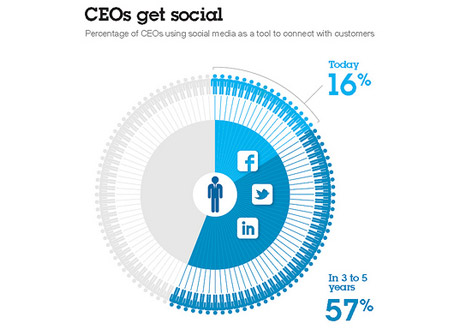
IBM CEO Study: Openness by Social Media Is Key Enabler to Organizational Success
According to the IBM CEO study conducted amongst 1,700 CEOs from 64 countries and 18 sectors, Open CEOs' identify openness enabled and supported by social media and technologies, as a major influence on their organization and its success. These organizations perform better because they are utilizing the collective intelligence, are more agile, able to act quickly to gain higher profitability and growth.
5 Key Success Principles – the Cure for Innovation Envy
Experience and research tell us five key success principles are seen across the cultures of ‘serial innovators.’ The good news: These characteristics can be adapted for any company, regardless of industry.
Finding the Social in Social Business
People speak of creating the social business. What does that phrase mean? Do we sip lattes and play foosball in the break room? How does this magical entity differ from its anti-social brethren? In this article innovation architect Doug Collins explores the intent and possibilities that define the social business.
Rewarding Creativity: 3 Lessons on When it Works
It is well known that intrinsic motivation–the kind that comes from working with a task because it's interesting, involving and challenging–has the strongest relationship with individual creativity. Extrinsic motivation–especially based on monetary rewards–has a detrimental effect on creativity. But is this really true? In this article, we'll explore how to reward creativity and realize that everything may not be as it seems.
Customized Careers – a lattice replacing the traditional ladder
We think of careers like ladders, don’t we? And when careers do not go straight up the ladder, we do not see them as (good) careers. But if you are in the business of providing talent this is a tradition that may need to be replaced by innovation. Replacing the traditional ladder with a lattice has led to significant improvements according to Cathy Benko, chief talent officer for Deloitte.
How to Solve 7 Challenges in Employee Driven Innovation
The collective wisdom of your co-workers is a huge asset in the fuzzy front end. But which challenges do you need to address and solve in order to create a structured and effective employee driven innovation process? Read more about a method using idea markets as a powerful incentive. And it has already proven its worth in a number of large Scandinavian companies.
The Challenge of Relative Values
Two new research studies examine on the one hand personal values among young adults on the other the realities of corporate values and culture. Both have some harsh truths to tell. The two forms of ‘relative values’ these studies discuss, have implications for strategic flexibility and devolved decision making for market success. Coupled with greater transparency they may also mean that companies need to take a long hard look at their corporate cultures.