

DAM Promising: Collaborative Innovation Meets Digital Asset Management
Media firms such as the BBC, HBO, and Corbus, along with brand-drive organizations such as Visa and the Estee Lauder Companies, hire people to manage their digital assets. Digital assets include content such as television shows, movies, photographs, and advertisements. Viewers and consumers create their own content, too, in response to shows and brands. Co-creation introduces new challenges for digital asset managers, including deciding what content to manage. In this article innovation architect Doug Collins explores possibilities for digital asset managers to apply the practice of collaborative innovation to help them do their own work more effectively.
The Perils and Possibilities of of Crowdfunding
Just because you can create a crowdfunding campaign for your next Big Idea doesn't mean you should, as book author Glenn Fleishman recently discovered.
How do Specialized Intermediaries Facilitate Creative Crowdsourcing?
One of the most obvious benefits of crowdsourcing is its ability to stimulate creativity and accelerate innovation on a global scale. Leading companies such as Dell, Starbucks or Frito-Lay have pioneered this trend by building platforms (respectively IdeaStorm, MyStarbucksIdea and Doritos Crash The SuperBowl) that connect them to a crowd of passionate individuals. These success-stories paint a very positive picture of crowdsourcing, but the reality is that connecting with the crowd is not as easy as it seems. In this post, we will present the advantages and drawbacks of using crowdsourcing to source creative ideas, and explain how specialized intermediaries can help companies by providing crowds, platforms and experience.
Why HR and Finance will Love Collaborative Innovation
It’s good to have friends in high places as you transform the world through the practice of collaborative innovation. In this article innovation architect Doug Collins introduces you to your buddies in human resources and finance. Say hello!
The Missing Ingredient of Crowd-based Idea Generation
With the growing popularity of open innovation, crowdsourcing and web-based suggestion schemes where the best ideas are decided by popular votes, many of us tend to forget a very simply truism: creative people do not follow the crowd. At minimum, they do their own thing. At best, they lead the crowd.
Core Competence Management in the Era of Open Innovation
“Core competences” are a major concept in managing innovations and technologies. In the era of Open Innovation, the established concept of core competence management needs to be updated. innovation-3’s Frank Mattes recently met with a group of 20 innovation / technology managers from leading firms to work out how this could be done – with the practitioner’s perspective in mind. In this article you will find the key results of the discussion.
Depicting the Intent Behind Collaborative Innovation: the Grid
Intent guides the practice of collaborative innovation. What problem do we want to solve? What possibilities do we want to explore? In introducing his blueprint for collaborative innovation, innovation architect Doug Collins suggested applying the Balanced Scorecard as a simple, visual approach to start the conversation around intent. Recent practice with clients has him revisiting this guidance. This article presents his latest thinking.
Designing the Perfect Ideas Competition
What's the most effective way to design an idea competition that doesn't just result in a huge pile of ideas, but enables teams to implement ideas that will help to make your organization more creative? Jeffrey Baumgartner shares one practical framework for making this happen.
Open Innovation: Beiersdorf’s Intimate Approach to External Partnerships
Michael Fruhling rececently spoke with Dr. Horst Wenck, Beiersdorf's Corporate VP of R+D, about his company's approach to open innovation. One key is its OI web portal, which carefully cultivates a qualified set of external partners. Once a relationship is established, Beiersdorf forms a 'project house,' where qualified partners are deeply immersed in its current technical needs and challenges and the corporate intelligence it has gathered to support its OI priorities.
Re-envisioning Client-Agency Engagement through Collaborative Innovation
The Digital Age disrupts the practices and beliefs that gird the archetypical relationship between advertising agency and client. The Procter & Gamble Companies discarded a relic of the client-agency relationship, the creative brief. They seek more authentic engagement that leads to more compelling campaigns. What possibilities do clients open when they move from exchanging information to engaging in co-creation? What role might the practice of collaborative innovation play in redefining roles between client and agency?
Finding Your D. Money: the Three C’s of Critical Question, Community & Commitment
We prize our time. People who practice collaborative innovation know they cannot monopolize the waking hours of their sponsors and communities. In this article innovation architect Doug Collins explores the three C’s of critical question, community, and commitment. Practitioners raise the odds that everyone involved in collaborative innovation will view their time as well spent when they help sponsors address the three C's in authentic ways.
Open Innovation: Colgate’s Sensible External Partnership Approach
Ken Klimpel, Colgate Palmolive's Worldwide Director of External Innovation and Outreach shares his perspective on some aspects of the approach he and his company take to drive their open innovation successes.
Open Innovation: The Technology Scouting Uncertainty Principle
In any supplier/customer relationship, both sides (but quite often the supplier) desire clarity regarding the certainty of the relationship. When there is uncertainty, there is angst. Some of this is natural and necessary. However, Michael Fruhling believes that in open innovation it is needlessly excessive. How can it be reduced?
To get Innovation…Try Stimulation
There is a saying, “horses for courses”. It means that certain character types (horses or people - or others) perform in different ways depending upon the circumstances. This holds true in collaborative engagements, whether they are crowdsourcing exercises, virtual focus groups, online research communities or a growing number of other online activities. A key success factor that we found over the last number of years -- and perhaps the key success factor-- is understanding what the best stimulative environment is for that activity, and your participants.
Applying Collaborative Innovation to Agile Software Development
The agile model for coding software rewards developers with more satisfying work and clients with more useful applications, sooner. Software developers who embrace agile principles face two challenges, however. We work globally: people cannot collocate. We source work by fiat: teams cannot gel to pursue challenges that engage them. In this article innovation architect Doug Collins explores how people can apply the practice of collaborative innovation as a means to realize the promise that agile development offers.
Creative Problem Solving Technique: Become the Problem
When we are trying to generate ideas in order to solve a problem, whether through anticonventional thinking, brainstorming or another method, we typically distance ourself slightly from the problem. We look for ideas on how to improve our company’s product, how to deliver better customer service, how to cut costs or alternative business models. In all of these cases, we separate ourselves from the problem and, by so doing, we potentially limit our understanding of the problem. Why not take a different approach and become the problem?
Governance in the Context of the Innovation Blueprint
What does governing the practice of collaborative innovation mean? When we govern do we compromise the spirit of openness and experimentation that enlivens the practice? In this article innovation architect Doug Collins applies the blueprint for collaborative innovation to explore these critical questions. His view? Governance is guidance: helping people work to their potential.
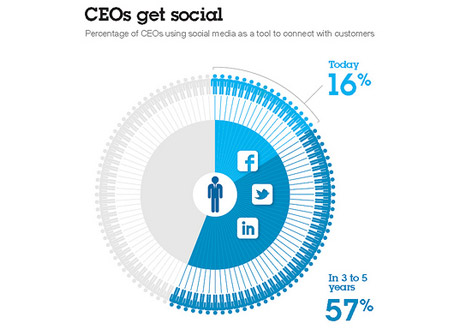
IBM CEO Study: Openness by Social Media Is Key Enabler to Organizational Success
According to the IBM CEO study conducted amongst 1,700 CEOs from 64 countries and 18 sectors, Open CEOs' identify openness enabled and supported by social media and technologies, as a major influence on their organization and its success. These organizations perform better because they are utilizing the collective intelligence, are more agile, able to act quickly to gain higher profitability and growth.
7 Key Steps to Successful Open Innovation in China
More and more Multinational Companies (MNCs) are turning to China for open innovation for several important reasons. Find out what those reasons are and learn more about best practices to succeed at open innovation in the unique Chinese market. This article delves deeper into how harvest the power of innovation from one of the world’s most populous and fastest-growing countries
Finding the Social in Social Business
People speak of creating the social business. What does that phrase mean? Do we sip lattes and play foosball in the break room? How does this magical entity differ from its anti-social brethren? In this article innovation architect Doug Collins explores the intent and possibilities that define the social business.
Demystifying the Path to Technology Partnerships
There is often a considerable amount of ambiguity at the outset of open innovation partnerships. Quite often, the technology customer is considerably larger than the provider and is being pursued versus being the pursuer. The technology provider almost never knows the full extent of what needs to be demonstrated in order to earn a customer's business commitment. They are also quite often reluctant to ask so as to avoid offending the other party or seeming ignorant or unsophisticated. How can this situation be improved?
Open Innovation in SMEs
Difficult market conditions force SMEs to adapt or reinvent their businesses through new technologies or unique value propositions, but they often lack resources and technical capabilities and must thus collaborate with others to compete. Those that succeed in this transition often employ open innovation. A study by Dr Wim Vanhaverbeke, in collaboration with Ine Vermeersch and Stijn De Zutter found that open innovation can create new opportunities for all types of SME – from start-ups in high-tech markets to players in traditional markets – because they can change business models without having the required technologies in-house.
Social Media – Digital Recombinant DNA?
Social media has already fundamentally changed the way many of us live our lives or do business. In coming years its role in almost every aspect of public, private, political, commercial and community life is likely to grow; it could be seen as digital recombinant DNA, central to everything but changing and being changed, made up of millions of bits and bytes, with multiple roles, instructions and connections. This extended trend alert indicates some of the trends affecting the current development of social media, as a prelude to further discussions at a forthcoming foresight meeting in London; it does not claim to be comprehensive, but a jump off point.
A promising Approach to Finding Technology Solutions: Supplier Summits
Given the relatively small number of qualified solution providers for any given technical challenge, one fairly productive and successful problem solving approach undertaken by corporate technology seekers is to organize "supplier summits."