

China – Hotbed of Innovation for our Planet in the 21st Century?
Never has the world witnessed a large market emerge so quickly as China has. As the economy grows it is also changing. China is fast climbing the value curve, transitioning from low-cost manufacturing to innovation-led growth. In telecommunications, supercomputing, life sciences, non-fuel energy sources and “green-tech” in general, there is already a vibrant innovation/research and development (R&D) scene.
Driving Innovation by Corporate Venturing: How to Master Governance and Culture Challenges
Corporate venturing is becoming an important tool for big companies to complement internally driven innovation activities. However, becoming a serious player in corporate venturing requires governance principles and creates cultural dynamics which do not fit into existing corporate environment easily. This article discusses those challenges in detail and suggests ways how to deal with them.

The Seven Essential Characteristics of Innovative Companies
What makes a company innovative? Innovation is nothing more than a tool that enables companies to achieve unique, strategic goals. It should not simply be a slogan, nor an end unto itself, argues Jeffrey Baumgartner. To be truly innovative, an organization should have seven essential characteristics.
Foment Your Culture of Innovation
Many seek a culture of innovation for their organization. What characterizes such a culture? How would you know if you have one? Would your colleagues agree? In this article, innovation architect Doug Collins reflects on the characteristics that comprise a culture of innovation. He explores, too, how people might assess the state of their organization as a first step in fomenting a culture of innovation.
Inspiration Versus Aspiration: Two Approaches to Innovation Leadership
Inspiring leadership is what we have all been led to believe creates successful businesses. The fact that history is dotted with examples of successful companies which businesses study closely for clues their own leaders can emulate, clearly shows that we believe there is a formulaic style of leadership which is key to a thriving business. If only it were that simple. Kate Tojeiro, founder of progressive leadership consultancy, X-Fusion, takes a closer look at two key types of leaders.
Creating Networks of Interest
Previously, we told you about a research project where we examined more than 60 companies considered to be vanguards in their respective fields. From this group emerged five “serial innovators:” companies that habitually detect where markets are going, and use innovation to meet new customer demand. These companies share a handful of characteristics, the first of which is leadership’s empowerment of innovation, which we addressed in depth last month. The second of these shared characteristics: They leverage interest networks.
Role Modeling Creativity: “They don’t do what you say, they do what you do”
The maxim quoted in the title is famous for Swedish parents and essentially means that words can only take your teachings that far. But does this maxim extend to the work context? In this article, aimed at managers and leaders in organizations, we will examine the concept of creative role models and see how leaders can use themselves to leverage creativity in their teams.
Innovative Switzerland
Switzerland is more innovative and entrepreneurial than generally thought. The world holds on to the caricature of Heidi and of utterly dull bankers, evoked by Helmut Schmidt, many years ago: “Europe is not governed by the gnomes of Zurich”. We forget the implications of the fact that the Swiss national hero is the ultimate rebel: Wilhelm Tell; and rebellion is companion of innovation.The strong Swiss franc and the weak state of the economies of its trading partners will make 2012 difficult, but Switzerland scores tangible successes: prosperity, low debt, reasonable growth, public budgets in the black, low unemployement and trade surplus. This miniature model of Europe must be an inspiration for the EU to become what it should be: the world’s most successful region in the 21rst century.
Innovation Foundations at PSA Peugeot Citroën
In my previous article ‘Establishing the Foundations for a Balanced Innovation Portfolio’ I discussed the important role played by key innovation foundations in the success of a systemized collaborative innovation program. Even though you’re in a less than perfect position, the important step is to recognize the relative strength (or weakness) of each foundation, then put actions in place to improve each one. In this article I'm sharing the experiences of PSA Peugeot Citroën on their first ever collaborative innovation campaign.
How R+D Can Build Marketing Support for its Ideas
Last week, we introduced the topic of R&D's frequent lack of marketing support for its ideas and some culturally ingrained attitudes that can contribute to this. This communication gap is frustrating, especially for those in R&D whose role it is to develop and sell-in new initiatives. This week, we continue this discussion and describe strategies to help overcome resistance.
Why Marketing Doesn’t Want R+D’s Ideas – and what to do about it
One of the most common frustrations expressed by R+D professionals is that marketing lacks interest in their ideas. Why is this often the case, and what can be done about it?
Are you Called to be an Innovation Leader?
If you want to be innovative, you need to be a leader. No individual or organization has become an innovative one by copying the actions of their competitors or peers. That may seem obvious, but evidence shows that most people fail to realize this critical fact.
Financial Innovation and its Undeniable Role in Society
Innovation in the area of financial services has undergone increased criticism since the start of the difficulties in international banking. This has fueled a general negative perception of innovation in financial services. In this article Dr. Anne-Laure Mention argues that innovation is not something to be feared as such, actually it is a driver of competitiveness and that the full benefits for society might not yet be visible.
Establishing the Foundations for a Balanced Innovation Portfolio
Corporate innovation programs can’t fulfill their potential without the right foundations in place. Many organizations are taking their programs across the enterprise. In this article we consider three key foundations and how they can be boosted to improve corporate innovation: the linkage between every day innovation and corporate targets, the levels of openness, trust and acceptance of diverse opinions.

Pulp Innovation Chapter LXXVII: The Culture Shift
With the first innovation effort under way, Marlow sets out to gradually shift the corporate culture of Accipiter to encourage more innovation. His mission begins with finding a champion in the HR department.
Creating the Conditions for Sustainable Innovation
Is your company a great place for innovation? That probably depends on whether you ask the boss or the underlings. According to a new study by Development Dimensions International, a human resources consulting firm, the boss and the workers could hardly disagree more. Read more and download the report that does recommend some practical action steps that can be used to help bridge this disconnect between leaders and employees.
Get Innovative in Helping Employees to Accommodate Change
You can find in this article a grasp overview of reasons for change in our organization and how it could be boosted by applying innovative approaches.
Designing the Perfect Ideas Competition
What's the most effective way to design an idea competition that doesn't just result in a huge pile of ideas, but enables teams to implement ideas that will help to make your organization more creative? Jeffrey Baumgartner shares one practical framework for making this happen.
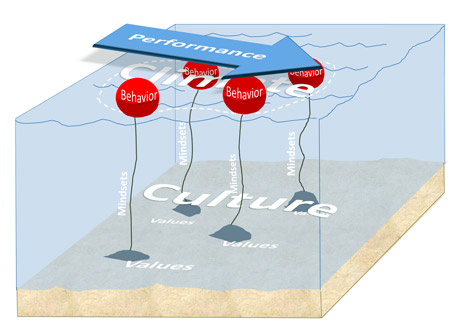
How to Change Innovation Culture the Fast & Viral Way
There are different approaches to facilitating cultural change within an organization in order to promote innovation. Bengt Järrehult argues that the viral change, whereby successful changes are achieved through experimentation and then spread by different groups copying or adopting the change leads to faster and more long-lasting culture change.
New Series of Articles on the Risks Faced by Innovation Projects
Every innovation project starts from an idea or a problem and mostly, all innovation teams do jump immediately to the feasibility study and scenario analysis dedicating little or no time to the assessment of the risks of innovation projects. This series of article represents an extended dashboard of internal, external and hidden risks of such projects in aiding innovation teams throughout their risk management activities. The first article looks deeper into what drives a successful innovation eco-system.
Why is Innovation so Often “Hit or Miss?”
This question has baffled many executives for quite some time. Management tries to replicate the special event or circumstances that created a successful innovation project but often fails. Companies have created positions such as Chief Innovation officer, innovation teams, and organizational strategies that promote innovation through diversity, team dynamics, and social networking. However, failure rates of 90% are common when innovations occur due purely to chance. What distinguishes whether an innovation is hit or miss?
4 Steps for Top Executives to Execute on to Truly Empower Innovation
Why would a company that rose to prominence based on its innovativeness abandon its lifeblood when the founder exists the building? There are many examples of this happening out there. However if they follow in the footsteps of the world’s ‘serial innovators,’ leadership can keep a company’s innovation flame lit without having to bring back the founding CEO.
The Eastern Way: How Chinese Philosophy Can Power Innovation in Business Today
In spite of spectacular economic growth, China is still afflicted by criticism that its traditional culture inhibits innovation. However, Chinese culture is now changing in response to fundamental techno-economic shifts, and philosophy is not the same as culture. This article shows how an unconventional synthesis of Chinese philosophical systems can power innovation opportunities in 21st century business—and not only for China.
Innovation’s Vital Role in Germany
Germany is a forward-thinking nation with the largest GDP in Europe. Germany is also one out of only four innovation leaders in the top performance group of all EU27 Member States. Their private and public sector R&D funding is on the rise in the midst of a global economic crisis and they enjoy growing economic ties with China. So what is Germany doing right?