


Cisco Ignites Companywide Startup Culture
In the past few years, the mass digitization of business and society has pressured every organization – large and small, private and public – to innovate at unprecedented speed. This digital revolution has incited a new and disruptive era of hyper competition. It has accelerated the pace of change exponentially. It has forced companies to reinvent themselves. And it has utterly disrupted institutions and their cultures, upended entire markets, and hatched new business models that challenge traditional ways of operating.
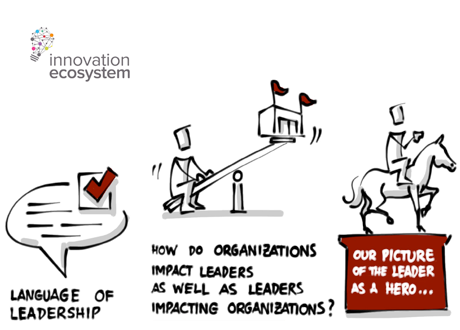
The Leadership Mindset: Disciplined Collaboration, Followership and Purpose
What makes a successful leader? Is there a secret formula for outstanding leadership above and beyond natural charisma? This is one of the golden questions that every HR manager and business owner wants to know. In fact, countless books and articles have been written on the subject. Emmanuel Gobillot is a leading author and speaker on the fundamentals of effective leadership and in this interview with Mark Bidwell he shares key insights about cultivating the leader's mindset.
Learning from the Humanitarian Innovation Laboratory
Innovation is all about survival – how often do we hear versions of that line? But in the field of humanitarian aid this really is the case. Innovation can sometimes be a matter of life and death. It’s a world characterised by crisis – but it’s also somewhere from which we might learn some new lessons to help manage innovation.
The One Skill that Innovators Forget
Most innovators cultivate traits like creative risk taking, positive reinforcement and strategic planning. However, there is another branch of innovation in which innovators still require a great deal of training.

Killing Companies with Lisa Bodell
Don’t let the title scare you off, that’s right, ‘killing your company’ is about making space for positive change and it’s not as hard or painful as it may sound. Just ask Lisa Bodell. She is a forward-thinker who developed processes to clean out the unnecessary bits from work places. It’s like feng shui for your business processes. In this engaging interview with Mark Bidwell—an executive intrapreneur turned entrepreneur—Lisa shares why identifying problems, getting rid of things and simply stop doing things to begin with creates bandwidth for an organization to grow and successfully change with the times.

The Global Innovation Index 2016
Since the release of the Global Innovation Index (GII) last year, the world economy has encountered a number of challenges that have led to further downgrades of global economic growth projections. In the context of such uncertainty, countries will seek ways to move the global economy out of its current holding pattern, thus avoiding a prolonged low-growth scenario. Innovation will be a critical ingredient to achieving this objective.
3 Reasons Crowdsourcing is Good for Small Businesses
Running a small business is not easy, especially when the small business is just starting out. Any misstep, even well-intentioned, can cause a serious setback. But have no fear! There’s a whole untapped squad of people out there ready to work for you for free! Here are three ways crowdsourcing is good for small businesses.
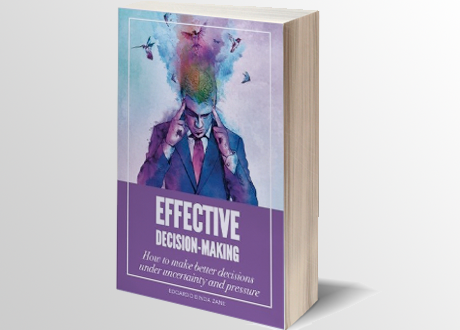
Practical Guide for Decision-Makers and Problem-Solvers
Corporate managers and entrepreneurs alike are accustomed to making tough decisions and seeking out the best possible solutions to everyday problems. It comes with the territory, but it’s not inherently easy. In order to reach a leadership position or own a company you probably have a knack for decision-making, but when the future of a business depends on the outcome, it’s important to reduce cognitive biases and calculate carefully.

Integrating Agile with Stage-Gate® – How New Agile-Scrum Methods Lead to Faster and Better Innovation
Recent experiences show that Agile project-management methods can be used in the innovation process and has a great potential to reduce development time and increase the success rate of new products. The article briefly outlines how an Agile method, such as Scrum, can be used within a structured innovation process with milestones and decision points, such as Stage-Gate®, and what benefits it provides to both manufacturers and service-providers.
Multi-tasking – The Challenge of Intermediaries in SME Support for Innovation
In view of creating more competitive regions and industry sectors, innovation capabilities of SMEs play a central role. SMEs are strong economic drivers in many countries, and their ability to innovate will determine the health of national and regional economies in the future. A key support for SMEs in their innovation efforts are public innovation support programmes.
Launching an Innovation Program: What You Don’t Know
Although innovation programs are becoming more and more embedded within the enterprise, it is still very common to find organizations that are just starting to experiment with formal, continuous innovation programs. Many IdeaScale clients that come to us are quietly launching pilot programs as proof-of-concept initiatives that will confirm innovation value for senior leadership.
Medicine can Teach Business and Government a Powerful Innovation Lesson
Many companies develop their new products in secret and behind their own closed doors. They then launch their radical new approach with a fanfare of marketing expenditure. They are often disappointed. Paul Sloane looks at how organizations can harness the power of randomized control trials to drive successful innovation.

A New Disruptive Paradigm
Let’s face it, running a business in today’s world is a formidable endeavor: change and disruption have become the new norm. In an effort to keep up, innovation is at the top of every executive’s priority list and new innovation methodologies, training and strategies are available every day. But is all the hype really helpful while Western businesses and policy-makers are working under an outdated paradigm?
Involving the Crowd in Product Development
Even before the term was coined in Wired Magazine in 2006, crowdsourcing was utilized as a way to accomplish goals. The strategy had been used for several hundred years before it was officially given a name, but since being named, crowdsourcing has grown into a huge field, spawning subdivisions of the strategy and being used for a multitude of purposes. Wikipedia is one of the most recognizable and mainstream instances of crowdsourcing, designed to elicit and compile knowledge from the masses. Crowdsourcing has been used in real time to track public transportation and traffic updates with various apps.

30 Minutes to Get Unplugged from the Innovation Hype
At a time when organisations are plugging more effort into innovation, Gerard Harkin has written a book called 'Innovation Unplugged'. Why? As he puts it himself, Gerard is on a mission to make innovation more effective by ‘unplugging’ from the hype, confusion and ‘gobbledygook’ that are so prevalent today, and return to the basic principles of innovation, and its role in enabling business growth.
Challenged by Innovation? Someone May Have Already Solved Your Problem
In 1946, Soviet inventor and science fiction writer Genrich Altshuller developed a methodology called TRIZ. It became known as "the theory of inventive problem-solving" and was based on a simple premise: across different disciplines and applications, the same challenges occur again and again. Unfortunately, people keep solving nearly identical problems from scratch. The main lesson from TRIZ is this: if you understand how your innovation challenge is similar to someone else’s, you can reapply solutions that already exist, instead of reinventing the wheel time and again.
From Bankruptcy to Industry Leading Success – The LEGO Story
LEGO has earned the right to celebrate. Not only are kids playing with more mini LEGO people than there are human beings on the planet (Delingpole J, 2009) but in 2015, they were nominated by Forbes as the most powerful brand in the world. For a company which was on the brink of bankruptcy in 2004, the toy maker has made an amazing turnaround. They restructured, hired a new CEO, and forged more licensing partnerships than ever before. Most importantly, they discovered the secret to some of the world’s most successful, low risk innovation strategies.
5 Reasons Why Your Company Should Innovate
Over the last few years, innovation has become a ubiquitous branding tool. Whether you are a blue-chip company or a local start-up, innovation has entered the everyday lexicon of CEOs and administrative staff. Compared to prior marketing trends, innovation is not a passive buzzword—it is critical to the success of your company.
Collaborate with Night and Nature to Come up with New Ideas
It is not widely known that most people, before the advent of the Industrial Revolution around 1800, tended to go to sleep shortly after nightfall but then get up around midnight for several hours before going back to sleep until dawn. Modern lab experiments have been able to reproduce this ancient, two-sleep pattern. Furthermore, there is separate anecdotal evidence that a number of people currently practice divided sleep as a natural habit, without the prompting of an experiment. Some of these people, in turn, use their nighttime wakefulness period for creative thought, writing and problem solving. The divided sleep phenomenon fits in very well with the dualistic and holistic principles of East Asian philosophy. One should ideally integrate work, thought and sleep with the natural light cycle in order to maximize the potential for individual creativity over the course of a full day and night.
Avoid Innovation Paralysis – Why all Companies Can and Must Embrace Change
Someone once told me this: “Innovation is like an apparition of the Virgin Mary: one person saw her, but everyone talks about it.” Although funny, the quote aptly captures an attitude towards innovation that exists in many companies today. Innovation – and the skills that enable it – are sometimes considered as mystical gifts, preserved for the chosen few. In other cases, innovation is feared, because it involves unregulated processes, risk taking and investments with unpredictable outcomes. In this blog post, I’d like to make a case against this kind of innovation paralysis. Every company must innovate, and with the right understanding of the word ‘innovation’, every company can.
Urgently Wanted: The Design Driven Manager
The potential of Design Thinking becomes more and more visible because organizations like Apple, Coca-Cola, IBM, Nike en Proctor & Gamble not only show overtly that they use it, but start showing significant results. They outperformed their peers in the last decade with 219%, measured by the Design Value Index (assessment by Design Management Institute).
Creativity is not Enough: How to Turn Ideas into Revenue
“Eureka!’, Archimedes famously howled, while running butt naked through the streets of Syracuse. Soaking in his bath tub, the bearded Greek inventor had just discovered a new method of determining an object’s volume. Funnily enough, this well-known story captures two myths about innovation. One: it’s the work of a sole – and usually slightly eccentric – inventor. Two: chance has a part to play. For businesses, the reality is vastly different. Indeed, turning ideas into revenue requires quite a bit more than just ideation and luck.
Opening the Floodgates of Innovation: Insights from Deloitte Innovation Day
Take a quick glance around your office. What do you see? Categorically “Start-up” types in t-shirts and jeans passing bottles of craft beer around? Or “Suits”, with their collars starched to perfection, hunched over their laptops and scrambling away at emails? What would happen if we flipped these scenarios around? I for one, would love to see my accountant rock up to work in a Hawaiian Shirt; a calculator in one hand, and a piña colada in the other. But what difference would this make?
Are Results Based Work Environments the Future or Fantasy?
Results-based work environments, also known as results-only work environments (ROWE) aim to increase productivity by giving employees the freedom to work in the manner that suits them best as long as they produce results. The old paradigm of coming in to work at a set time and leaving at a set time hasn't been the standard for quite some time. Employees regularly have to work long hours, and there is research that shows these long hours may be better spent working from home. The Sloan Center on Aging and Work at Boston College notes that this shift represents a dramatic change from the traditional 40-hour work week.