


Making Your Idea Matter
For many innovative people, the problem is not coming up with enough ideas, but getting attention for those ideas we decide to implement. To solve this problem, we need to invest more time developing persuasive stories that make an emotional connection with the people we're trying to influence. That's the message of Bernadette Jiwa's terrific book Make Your Idea Matter: Stand Out With a Better Story.

Case: Open Innovation in the Biorefinery Industry
Last year I came in contact with the co-founder and advisor of the Biorrefiniria Brasil open innovation community, José Augusto T. R. Tomé. He started an interesting venture within the chemical sector, a venture focused on biorefinery. Read further to learn more about his vibrant innovation community and open innovation in general.
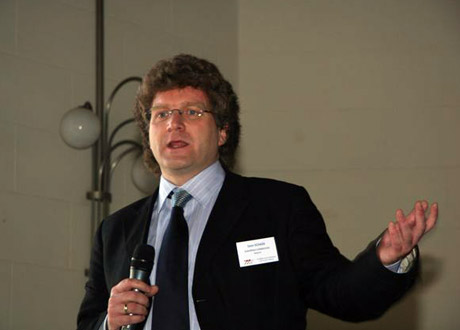
Sven Schade, Policy Officer at European Commission in Dialogue with Innovation Management
In connection with the new collaboration with IMP³rove – Academy, InnovationManagement.se sat down with Sven Schade, Policy Officer at European Commission, to explore how small and medium-sized entities can benefit from having increased access to innovation management tools and learning.
Is Cash becoming Obsolete?
Finding ways to make it easier and more convenient to spend money is the aim of many innovations in the area of electronic payments. A number of innovative electronic payment alternatives are all vying to become the new standard in electronic payments and displace the long time standard, the card with a magnetic strip. Any of these new technologies could make the need to carry cash obsolete.

Steal Like an Artist: A Concise, Inspiring Guide for Creators
Steal Like an Artist: 10 Things Nobody Told You About Being Creative by Austin Kleon is a wonderful little book that is designed for anyone who is ever has had a desire to create something amazing, but doesn't know where to start.

Thinking About Starting Your Own Venture? Read Hugh MacLeod’s Book, ‘Evil Plans’
Are you a cubicle slave who longs to be their own boss, to take their Really Big Idea and run with it, unencumbered by the shackles of the corporate world? Then you need to pick up Hugh MacLeod's new book, Evil Plans: Having Fun on the Road to World Domination.
How Companies Tap the Potential of Innovative Users – Four Examples from Germany
Open innovation has found its way into companies’ innovation processes and is a widely used approach to spur collaborative innovation with consumers. A multitude of methods and tools have come into being, creating confusion about how to make the most out of users’ knowledge and creativity. This article provides innovation managers with insights into four popular open innovation practices at four German blue chips and contrasts the various approaches.
中国的消费者将拯救经济
从现在到2020年,中国的消费者将成为中国经济的主要推动者,而且很可能成为全球经济的推动者。这里有巨大的机会,届时中国人每年将会有成百上千亿美元的收入,人均收入将会是当前水平的三倍,可支配收入高达每年一百亿美元。满足中国消费者的需求,很可能是有史以来最大的机会之一;也是巨大的挑战之一:如何不耗尽地球上的资源;不创造债务激起的经济泡沫和高额的通货膨胀。
All in the Numbers?
Big data is a hot topic in the business press. Its promise of greater insights and efficiency, improved innovation and competiveness, not to mention income streams for the providers of data analytics tools are a rich source of discussion. Several recent developments indicate the power of using data analysis and statistics effectively to reach conclusions, and we almost certainly ‘ain’t seen nothing yet’ as big data techniques emerge. However, statistics do not necessarily tell the whole story and are open to radically different interpretations. That said, the power of numbers and modelling is rising.
Can Catering for Creativity Make Innovation Happen?
Many firms tend to mix the terms and concepts of creativity and innovation. There is a view that catering for creativity automatically makes innovation happen. In this post Susanna Bill compares the works from three different authors about the factors influencing a creative and innovative climate. What can be learned?
6 Mega-forces of Change that Affect Innovation
Today, there are six essential forces that are driving the changes that are occurring across much of today’s world. While these may not be the most pressing issues for your company, chances are that some combination of them will have a significant influence on your situation, on the strategic choices you make and thus on your approach to innovation.
Partnering with U.S. Universities in the Era of Open Innovation
Today’s University is a rich resource for companies seeking game-changing technological breakthroughs. In this in-depth article Melba Kurman looks at the benefits of open innovation partnerships between companies and American university researchers.
A Strategically-Focused Innovation Process
Many people assume that creating new ideas is the beginning of the innovation process, but actually that’s not true, according to Langdon Morris. He explains that ideation occurs in the middle of a disciplined, strategically-focused innovation process. In this article, he outlines an 8-step innovation process that promises better results than the traditional 'spray and pray' approach to developing and managing ideas.
How to Effectively Manage the Fuzzy Back End of Innovation
You have doubtless heard of the fuzzy front end of innovation. It is another name for idea generation. But Jeffrey Baumgartner believes that the back end of innovation, where implementation is supposed to take place, is just as fuzzy. Many companies lack clear, efficient processes for implementing the ideas they generate.
The Dynamic Duo of Innovation: Ethnography and Big Data
The combination of Big Data and ethnographics can be a potent toolset for uncovering innovation opportunities, as a growing number researchers are discovering.

Mind Mapping Software: A Simple Approach to Idea Management
Small to medium-sized businesses typically don't need an enterprise-level idea management system. What they need is a simple tool that enables them to capture, improve, evaluate and take action upon their best ideas. Mind mapping software is a tool that can help.
A Simple Template for Choosing an Innovation Challenge
People who practice collaborative innovation envision a compelling future. They transform their communities, their organizations, and themselves by helping people realize their potential for leadership as they form and evolve ideas. Reality check: effective visionaries use pragmatic tactics to move from point A to B. In this article, innovation architect Doug Collins shares a simple template that practitioners can use to help sponsors of innovation challenges choose where to begin their journey.
Creating Networks of Interest
Previously, we told you about a research project where we examined more than 60 companies considered to be vanguards in their respective fields. From this group emerged five “serial innovators:” companies that habitually detect where markets are going, and use innovation to meet new customer demand. These companies share a handful of characteristics, the first of which is leadership’s empowerment of innovation, which we addressed in depth last month. The second of these shared characteristics: They leverage interest networks.
Engagement Is Key to Business Performance: Digital Innovation as Catalyst
Booz&Co wrote in their article “The Social Life of Brands” on Strategy+Business that the value of a brand is linked with the relationships it has with its customers, creating and retaining them. For marketing, its fundamental task is managing these relationships. In a recent research by Gallup the results were striking, a 240 percent boost in performance was achieved when both employees and customers were enaged. This is exactly, in a highly technological driven business environment, digital innovation is the catalyst that improves engagement and provide means to manage relationships better, faster and in a cheaper way though digital.
Preparing Ourselves for Innovation Standards
There has been a continued debate around finding and adopting a set of standards for innovation. I blow a little hot and cold on this - not dependent on the time of day but the very “force” that is pushing the agenda along. Far, far too many who push for standards often have very narrow agendas, where this fits their commercial purpose and you get the feeling that they are not as aligned to the broader innovation communities as they should be.
The Power of Art in Place
Major catastrophic events aside, we are and will continue to be an urban planet; by 2030 60% of us will live in cities. Ensuring that those cities are economically successful, liveable and functional will enhance human health and wellbeing; pleasant places is becoming a focus of research, technological investment and policy discussions on a grand scale. Art and artistic endeavour in all its guises, from major public works to small scale neighbourhood schemes, will also have a major role to play in creating attractive places and economic vitality.
Role Modeling Creativity: “They don’t do what you say, they do what you do”
The maxim quoted in the title is famous for Swedish parents and essentially means that words can only take your teachings that far. But does this maxim extend to the work context? In this article, aimed at managers and leaders in organizations, we will examine the concept of creative role models and see how leaders can use themselves to leverage creativity in their teams.
Systematic Innovation and the Journey Towards a Unified Innovation Management Standard
As the need for systematic innovation deepens, establishing common innovation management standards becomes a precondition for sustained value creation in all organizations – longstanding or new, large or small, public or private.

Searching for Needs is the Best Innovation Strategy
Is it possible that only a quarter of all companies are highly effective at the front end of innovation? If so, what kinds of companies are most successful at the ideation and conversion stages? Gijs van Wulfen describes three different kinds of companies and suggests the Need Seekers strategy offers the greatest potential for superior performance in the long term.