

Social Media – Digital Recombinant DNA?
Social media has already fundamentally changed the way many of us live our lives or do business. In coming years its role in almost every aspect of public, private, political, commercial and community life is likely to grow; it could be seen as digital recombinant DNA, central to everything but changing and being changed, made up of millions of bits and bytes, with multiple roles, instructions and connections. This extended trend alert indicates some of the trends affecting the current development of social media, as a prelude to further discussions at a forthcoming foresight meeting in London; it does not claim to be comprehensive, but a jump off point.
Finding Time, a Scarce and Necessary Resource
Browsing through these paragraphs will take you approximately two minutes. If you read them more carefully, four perhaps. Not a lot of time or investment. In this blog Susanna Bill reminds us why time is key for innovation and organizational change.

Changing Culture by Doing: Using Behavior as a Lever to Improve Innovation Across Complex Companies
It doesn’t matter how many smart processes and methods you have in place unless the culture is right. Dive deeper into the discussion about innovation culture and learn more about key success factors to operate cultural changes in a complex organization. This IM expert panel discussion is moderated by Chief Solver Gregg Fraley from KILN, joined by three experts from multinational companies; Dennis Curry from HP, Bengt Järrehult from SCA and Adi Codaty from United Healthcare International.

Pulp Innovation Chapter LVIII: The Return of Status Quo
While working hard to push the innovation plan forward in record time, Marlow is surprised to find he has been assigned a new team member. He discovers quickly that the new colleague is very invested in the existing processes and methods. They've thrown him yet another obstacle instead of a much-needed catalyst.

Part 5: Choice Navigation: Turning Burden of Choice into an Experience
When providing a customizable product how can a firm minimize the burden of choice and maximize the customer joy resulting from the co-creation process? In part five in this series on mass customization Professor Frank Piller explains how to turn choice complexity into customer experience and loyalty.
A promising Approach to Finding Technology Solutions: Supplier Summits
Given the relatively small number of qualified solution providers for any given technical challenge, one fairly productive and successful problem solving approach undertaken by corporate technology seekers is to organize "supplier summits."

Sidestep & Twist: Mechanisms Behind the Battle Between Apple, Google, Microsoft & Facebook
James Gardner’s new book takes a look at innovation from another perspective – it’s not always about new ideas but how new ideas are made useful. In this book review René van der Hulst walks us through the three mechanisms Gardner has identified that accelerate acceptance of new products or services and increase competitive boundaries.
A Lesson in Innovation – Why did the Segway Fail?
The Segway PT is a two-wheeled, self-balancing battery electric vehicle invented by Dean Kamen. It was launched in 2001 in a blizzard of publicity. Yet it has failed to gain significant market acceptance and is now something of a curiosity. In this article Paul Sloane takes a look at what lessons to be learned from the failure.
Reimagining Media & Entertainment through Collaborative Innovation
Established firms in the media & entertainment space struggle to prosper in the Digital Age. New business models, enlivened by technology, erode traditional sources of profit. What possibilities for reimagining the business exist? In this article, innovation architect Doug Collins suggests one avenue to pursue: consider the benefits that come from learning how to convene a community on the critical question by embracing the practice of collaborative innovation. Apply the practice to help people work to their potential.

Part 4: Robust Process Design: Fulfilling Individual Customer Needs without Compromising Performance
Offering customized products is a strain on a company's resources. What are the different ways that you can minimize the deterioration in the firm’s operations and supply chain? In part four in this series on mass customization, Frank Piller and Fabrizio Salvador explain the robust process design - whereby the firm reuses or re-combines existing organizational and value chain resources to fulfill differentiated customers’ needs.
Pulp Innovation Chapter LVII: Innovation Peaks and Valleys
After reaching their first peak of convincing Accipiter to implement an innovation program, now begins the actual work of creating and executing a plan that will make the organization more innovative. The path seems daunting at first, but Marlow has enough experience under his belt to guide the way.

How to Create an Innovation Mission Statement
Often individuals and organizations tend to get stuck in the mode of talking about innovation and/or trying to understand innovation. The only way to really know innovation is to do innovation, and learn from your mistakes along the way. In this article Harun Asad suggests preparing an Innovation Mission Statement as an initial, action-oriented way to get out of the rhetoric trap.
The Eternal Battle Between Important & Urgent – Can be Solved
Do you often find yourself procrastinating on important, yet non-urgent matters in order to take care of the stuff that needs immediate attention? This all-too-common circumstance also takes place on a larger scale. Bengt Järrehult walks us though how to deal with the incremental and breakthrough projects at the same time
Dark Tourism Emergent
Two recent events – one a corruption tour, the other the opening of a new academic institute- appear to extend and change the nature of what has become known as ‘dark tourism’- an interest in death and the macabre. New technology will continue to expand the potential offer of dark tourism; it may also do for politics and corruption, what eco-tourism has done for awareness of the environment.
21 Situations When you Should Not Innovate
With an abundance of innovation success stories circulating the net and popular business publications, when do we hear about the other side of the coin – when is innovation not the answer to our organization's problems? Gijs van Wulfen provides 21 examples of when we should avoid innovating. What are your experiences?
Part 3: Solution Space Development: Understanding where Customers are Different
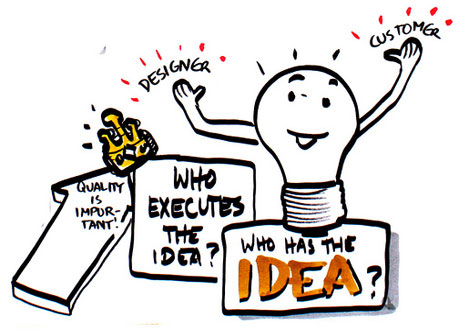
A company seeking to adopt mass customization must first understand what the idiosyncratic needs of its customers are. After this crucial step, the company may establish what it is going to offer and what it is not. In part three in this series on mass customization, Frank Piller and Fabrizio Salvador walk through some of the potential methods of solution space development.
Pulp Innovation Chapter LVI: Building Momentum
Bright and early Monday morning Marlow heads back to Accipiter hoping that the executive promise of a full commitment to innovation has not died down over the weekend. Will all his hard work finally pay off?
Social Product Innovation Challenges: Sustaining Processes
A couple months ago I laid out the framework for the most common challenges companies face as they get started with their social product innovation initiatives. The most common challenges fall into five main buckets – strategy, people and culture, business processes, technology and sustainability. So let’s take a deeper look at typical sustainability challenges and some ideas for overcoming them.
A Blueprint for Effective Collaborative Innovation
Blueprints help people envision the future in a clear, practical way. What will the finished work look like? How will we create it? What possibilities does the new creation hold? In this article innovation architect Doug Collins introduces a blueprint for the practice of collaborative innovation. The blueprint helps people envision their organization as they transform it through the practice.

Part 2: The Market for Mass Customization Today
As NetNatives become consumers and buyers are "trained" by personalized offerings, the market is finally ripe for mass customization. In part two of this special series focusing on mass customization, Professors Frank Piller and Dominik Walcher take a closer look at what the current market has to offer and provide their conclusions after observing 500 leaders in the field from a customer perspective.
Pulp Innovation Chapter LV: Pre Innovation Project Nerves
With Accipiter's innovation project launch date set for Monday, Marlow spends the weekend ruminating about all of the possible outcomes. Will all go as planned?
How the Individual’s Groupthink Tendencies can Affect Innovation
What do attending a business lunch or going to Catholic Mass have to do with groupthink? Susanna Bill discusses the notion of groupthink and how experiencing something for the first time helps you snap out of it.

10 Tips for Successful Innovation Teams
Innovation projects are said to fail 90% of the time. Why is this? Part of the answer lies in the special “innovation teams” who are mandated with finding breakthrough growth in large corporations. Setting these teams up for success is vital, yet corporations often fail when doing this. This article provides a collection of ten tips that serve as a talent management roadmap for growth companies in search of high-performance teams that deliver.

Can Companies Sidestep Disruptive Innovation?
Can companies sidestep or blunt the effects of disruptive innovation? It's possible, but not likely, explains Steve Denning in a recent Forbes column.