

Innovators Talk Strategy for Driving Growth
As innovation leaders in industry gather to discuss the front and back end of innovation in a global context, a common theme emerges. Whether expanding to a neighboring country or across oceans, entering a foreign market is always a “beyond-the-core” activity requiring the development of new competencies. One solution: identify skills first, not people.
External Risks of Innovation Projects
The fact that innovation is a risky business is well-known. But what are those risks? After the identification and the assessment of the internal and hidden risks of innovation projects Altin Kadareja now delves deeper into an exploration of the external risks of innovation projects, those risks that the company can/does not fully control, mostly related to factors external to the company, meaning coming mainly from its environment.
How do Specialized Intermediaries Facilitate Creative Crowdsourcing?
One of the most obvious benefits of crowdsourcing is its ability to stimulate creativity and accelerate innovation on a global scale. Leading companies such as Dell, Starbucks or Frito-Lay have pioneered this trend by building platforms (respectively IdeaStorm, MyStarbucksIdea and Doritos Crash The SuperBowl) that connect them to a crowd of passionate individuals. These success-stories paint a very positive picture of crowdsourcing, but the reality is that connecting with the crowd is not as easy as it seems. In this post, we will present the advantages and drawbacks of using crowdsourcing to source creative ideas, and explain how specialized intermediaries can help companies by providing crowds, platforms and experience.
5 key Success Factors to Enable Transformational Innovation within Businesses
Transformational innovation for many businesses is inherently complex and, in many cases, high risk. It can be a big distraction, expensive in terms of cost and resource bleed from other key activities, must be managed carefully and will frequently not be successful. This article explores some key factors to work with when looking for transformational innovation.
New Series of Articles on the Risks Faced by Innovation Projects
Every innovation project starts from an idea or a problem and mostly, all innovation teams do jump immediately to the feasibility study and scenario analysis dedicating little or no time to the assessment of the risks of innovation projects. This series of article represents an extended dashboard of internal, external and hidden risks of such projects in aiding innovation teams throughout their risk management activities. The first article looks deeper into what drives a successful innovation eco-system.
Why is Innovation so Often “Hit or Miss?”
This question has baffled many executives for quite some time. Management tries to replicate the special event or circumstances that created a successful innovation project but often fails. Companies have created positions such as Chief Innovation officer, innovation teams, and organizational strategies that promote innovation through diversity, team dynamics, and social networking. However, failure rates of 90% are common when innovations occur due purely to chance. What distinguishes whether an innovation is hit or miss?
To get Innovation…Try Stimulation
There is a saying, “horses for courses”. It means that certain character types (horses or people - or others) perform in different ways depending upon the circumstances. This holds true in collaborative engagements, whether they are crowdsourcing exercises, virtual focus groups, online research communities or a growing number of other online activities. A key success factor that we found over the last number of years -- and perhaps the key success factor-- is understanding what the best stimulative environment is for that activity, and your participants.
Using Strategic Intelligence Platforms to Advance Innovation
Leaders need to develop a ‘habit of knowledgeability,’ according to Haydn Shaughnessy, who has written extensively on change and innovation for Forbes, WSJ, InnovationManagement and HBR, among other noteworthy publications. In this article, Harun Asad expands on this notion and suggests how to build and implement a strategic intelligence platform that facilitates advancing innovation.

Part 8: A Balanced View: Conclusions and Key Learnings
Whenever customers are not getting what they need, business opportunities are opened. When properly implemented, mass customization has the potential to provide a long lasting competitive advantage through better, more adapted products and services that can be sold at premium prices. This final article in the Customization500 series sums up the conclusions and key learnings.
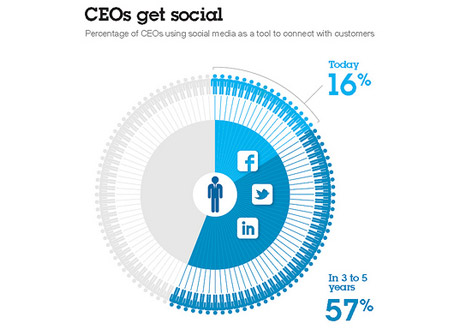
IBM CEO Study: Openness by Social Media Is Key Enabler to Organizational Success
According to the IBM CEO study conducted amongst 1,700 CEOs from 64 countries and 18 sectors, Open CEOs' identify openness enabled and supported by social media and technologies, as a major influence on their organization and its success. These organizations perform better because they are utilizing the collective intelligence, are more agile, able to act quickly to gain higher profitability and growth.

Part 7: Overcoming the Challenges of Implementing Mass Customization
While compiling data for the Customization500 study over a period of 12 months, the researchers noticed that roughly 20% of the companies went out of business during this time. In part 7 of this series, we take a closer look at the reasons why both startups and established companies fail at implementing mass customization and in what areas managers can expect the strongest resistance.

Part 6: Choice Navigation in Reality: A closer look into the Customization500
The customer's experience and a feeling of achievement during the co-design process is vital to the success of a custom product. In part 3 of the Mass Customization Series, Dominik Walcher & Frank Piller explain why managers should look beyond the sheer technology and back office integration of configuration toolkits and also focus on delivering a great configuration experience.

Part 5: Choice Navigation: Turning Burden of Choice into an Experience
When providing a customizable product how can a firm minimize the burden of choice and maximize the customer joy resulting from the co-creation process? In part five in this series on mass customization Professor Frank Piller explains how to turn choice complexity into customer experience and loyalty.

Part 4: Robust Process Design: Fulfilling Individual Customer Needs without Compromising Performance
Offering customized products is a strain on a company's resources. What are the different ways that you can minimize the deterioration in the firm’s operations and supply chain? In part four in this series on mass customization, Frank Piller and Fabrizio Salvador explain the robust process design - whereby the firm reuses or re-combines existing organizational and value chain resources to fulfill differentiated customers’ needs.
Part 3: Solution Space Development: Understanding where Customers are Different
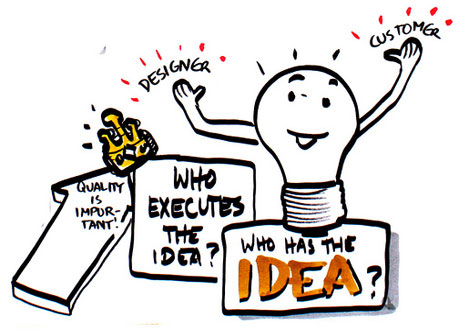
A company seeking to adopt mass customization must first understand what the idiosyncratic needs of its customers are. After this crucial step, the company may establish what it is going to offer and what it is not. In part three in this series on mass customization, Frank Piller and Fabrizio Salvador walk through some of the potential methods of solution space development.

Part 2: The Market for Mass Customization Today
As NetNatives become consumers and buyers are "trained" by personalized offerings, the market is finally ripe for mass customization. In part two of this special series focusing on mass customization, Professors Frank Piller and Dominik Walcher take a closer look at what the current market has to offer and provide their conclusions after observing 500 leaders in the field from a customer perspective.
Part 1: Competing in the Age of Mass Customization
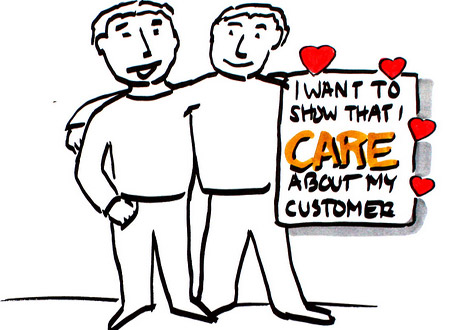
The concept of "the customer is always right" is taking on a whole new meaning as the the ability to manage personalized products is starting to determine whether your company can keep up with the competition. In part one of this series, Frank Piller, a leading expert on mass customization, personalization and open innovation, discusses the goals, scope and core capabilities of mass customization.
50 Great Innovators, One Better Future
Sustainability may still not be on the top of everyone's priority list, but those who do take green action get results, and big ones. Chris Sherwin, Head of Sustainability at Seymourpowell, shares his reaction to this year's Fast Company 50, where a few pleasantly surprising sustainability innovators could be found among the trend setters.

Special Series of Articles on Mass Customization from Frank Piller
The idea that consumers can customize their own products on a massive scale is having a tremendous impact on customer experience and expectations as well as the way organizations approach R&D. Following an extensive study of mass customization in the domain of consumer goods, this upcoming series of articles provides an overview on mass customization, its strategic capabilities, and the success factors that drive its implementation in business.
Innovate to Scale
Like a pair of jeans, the difference between a successful innovation and something tight and uncomfortable often comes down to size. A broadening global view of efficiency has increased the importance of scale when it comes to new projects and innovators should take into account social and environmental considerations when determining the scale of their innovations.
Innovation Through Co-creation: Consumers Can be Creative
A new trend in business and product development is ‘co-creation’. By its very name it implies a collaboration between the company and some other entity. In this case it is the consumer who partners in the creation of value. The term ‘co-creation’ is not new, however, but is now receiving more attention - driven largely through the increasing use of the Internet and social media websites - as companies endeavour to differentiate themselves from the competition.
Jugaad: Lessons in Frugal Innovation
Resourcefulness amid serious constraints is known in India as ‘Jugaad.’ In this article, Accenture’s Mitali Sharma suggests this simple concept — which gave birth to a $2,500 car, a $12 solar lamp, and a life-saving incubator made from car parts — might be the antidote to the complexity plaguing your innovation process.
Case Study on How Collaboration Drives Innovation in Emerging Economies
Collaboration is as much relevant to social innovation as it is for corporate houses for technology innovations. Collaboration, in fact, could provide added advantages with respect to the hidden culture related challenges & budgetary constraints when used for a social cause. In this article by Madhu Mani & Jayesh Badani, you will learn how a consortium of NGOs, Academia and Financial institutions from India, Netherlands and France came together to tap into the power of collaborative innovation.
Innovation for Financial Services
The concept of “financial innovation” can be defined as making and promoting new financial products and services, developing new processes to facilitate financial activities, to interact with customers and to design new structures for financial institutions. This article takes a look at the needs for innovation in the financial sector and some basic requirements.