

Managing Trade-offs Effectively when Adopting External Innovations
Most companies don't think through the trade-off between utilizing an external innovation as is versus customizing it nearly enough. As a result, they tend to suffer in time to market.
Bringing Your Balanced Scorecard Alive with Collaborative Innovation
Robert Kaplan and David Norton popularized the Balanced Scorecard twenty years ago. Its simple, visual framework helps organizations depict linked sets of goals that define strategy. Today, with new mindsets, practices, and technologies, people have more opportunities to engage in helping their organizations envision the future. The scorecard, however, can at times seem like an Easter Island statue, offering mute, impenetrable witness to firm performance. In this article Doug Collins explores opportunities for people to bring alive the scorecard by applying the practice of collaborative innovation.
Case Study on How Collaboration Drives Innovation in Emerging Economies
Collaboration is as much relevant to social innovation as it is for corporate houses for technology innovations. Collaboration, in fact, could provide added advantages with respect to the hidden culture related challenges & budgetary constraints when used for a social cause. In this article by Madhu Mani & Jayesh Badani, you will learn how a consortium of NGOs, Academia and Financial institutions from India, Netherlands and France came together to tap into the power of collaborative innovation.
Learning from Practicing Mass Customization and Open Innovation
Emotions, empathy, connection, love, storytelling, self-care – I am referring what I heard about the consumer. Creative revolution, democratization, social innovation, experience, passion – I am referring to what I heard about innovation.
Devising a Communications Plan for Collaborative Innovation
Members of a community engaged in the practice of collaborative innovation gain tremendous insights as they pursue that practice through the phases of an enquiry-led campaign. What ideas and insights do we contribute to the question at hand? What have we learned about the practice itself? One commitment that campaign teams make to the community is to create forums and provide the resources to share these insights. In this article Doug Collins suggests an approach by which the campaign team can build a basic communications plan to meet their commitment for sharing relevant information at each phase.
Insource Innovation to Generate Better Ideas & Fuel Product Pipelines
Is innovation a numbers game? We’ve all heard the statistics around the number of ideas it takes to eventually lead to a single successful product. But if we look at why it takes 3000 to 6000 or more ideas to find a single winning concept, the answer becomes fairly obvious: not every idea is a good idea. Mark Atkins explores how we can create better ideas, not more ideas.
Benchmarking E-mail Usage to Assess Collaborative Innovation
The practice of collaborative innovation opens the door to meaningfully transforming the ways in which people engage with one another as they pursue the critical questions facing the organization. Understanding the extent to which people continue to use incumbent means of collaboration can help you to understand the extent to which they have embraced the practice. In this article Doug Collins suggests having a look at our old friend, e-mail.
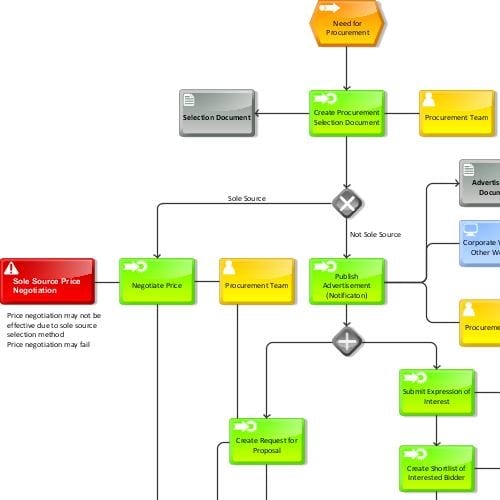
Business Processes Innovation
This article provides a reflexion on how employees innovative mindset could benefit corporation business processes, hence, their results
How to Accelerate Innovation through Challenge Driven Innovation
Challenge Driven Innovation enables companies to tap into diverse perspectives and talent to solve problems faster, more cost-effectively and with less risk, ultimately resulting in accelerated innovation outcomes and improved business performance. In this article Steve Bonadio introduces the concept of “Challenges” and their role in the emerging innovation management framework called Challenge Driven Innovation (CDI).
3 Ways to Tap into the Voice of the Culture
For decades we’ve been taught the surest way to developing successful new products is to listen to the voice of the customer. And we’ve all experienced focus groups and surveys. Consumers tell you they want one thing and then turn around and do another. So which is the right voice to listen to? Harvey Briggs provides some guidelines.

The Benefits of Partnering with US Universities in the Era of Open Innovation
Today's University is a rich resource for companies seeking game-changing technological breakthroughs. In this in-depth article Melba Kurman looks at the benefits of open innovation partnerships between companies and American university researchers.

Joe Pine: Economic Value Creation Through the Experience Economy
The Experience Economy is accelerated by the current global crisis according to Joe Pine. People don’t want more stuff, in this post-growth global economy people start questioning what they really value and that is experiences with others, loved ones, colleagues, friends, etc. There’s more demand for experiences and this will create job opportunities, moreover because commoditized services are being outsourced and offshored.

How to Successfully Implement Collaborative Idea Management
Are you effectively using the creative potential of your employees, customers and partners to address your innovation challenges? Collaborative idea management is a method to learn from the “wisdom of the crowd” in order to drive innovation. This in-depth article gives you an introduction including best practice from how Ericsson, the global telecom company worked with introducing and designing a successful collaborative idea management system.
How to Start the Practice of Collaborative Innovation
Today, many seek ways to transform the manner in which their organization convenes to solve problems and to reach a shared understanding of strategic intent. The practice of collaborative innovation offers a path forward. In this article innovation architect Doug Collins suggests a place for people to start their journey focusing on how to work with the enquiry led, internally focused form.
Framing the Critical Question: Insights from Survey Research
Campaign teams cover a lot of ground as they work with the sponsor of a collaborative innovation challenge. In this article, innovation architect Doug Collins makes the case that campaign teams should focus their energies on helping the sponsor develop the critical question that serves as the basis for convening the community. Forming the powerful question—the question that accurately reflects the sponsor’s intent and that resonates with the community—yields the greatest return on time spent in developing the campaign, relative to its ultimate success.
Different Strokes for Different Open Innovation Folks
Many firms discover in their search for unknown co-innovators that in different countries potential innovation partners react differently when they are approached by an Open Innovator. Frank Mattes looks at a recent study that may help shine light on the issue.
Lincoln’s Crowdsourcing: Allowing Consumers to be Designers
At the Pebble Beach, Calif. Concours D'Elegance Ford Motor’s Lincoln brand introduced a new tool “Virtual Voice of the Customer” to test design concepts on consumers. Lincoln asked attendees of the classic car show Aug. 20-21 to look at three design concepts based on vehicles from the '60s, '70s and '80s.
The Promise and the Reality of Collaborative Innovation
Practitioners in each new field emerge to explore its early, exciting promise, reconciling that potential with the results they achieve in reality. The rapidly emerging and rapidly evolving field of collaborative innovation is no different in this regard. In this article Doug Collins shares his perspective on the current state of affairs in terms of where the field stands, relative to the claims made on its behalf.
Practicing Collaborative Innovation to Become a Learning Organization
The human resources department rarely leads in applying collaborative innovation. Yet, they face daunting challenges in helping their stakeholders become a learning organization: one that can thrive in a rapidly changing world. In this article Doug Collins argues that one of the best ways that human resources can give people space to practice the five disciplines that Peter Senge identifies as defining learning organizations is to embrace the practice of collaborative innovation.
Put down the iPad: How to Set Rewards for Collaborative Innovation
Engaging in collaborative innovation by participating in activities such as ideation challenges can put community members at odds with the carrot-n-stick incentive and power structures that exist in every organization, including those that ostensibly support a culture of innovation. As the sponsor of your organization’s program for collaborative innovation, you can structure rewards in ways that give your community members the space and resources they need to pursue ideas to fruition. In this article, community architect Doug Collins helps you think through the process of defining a rewards structure for a basic ideation challenge that respects the innovators and collaborators who contribute.
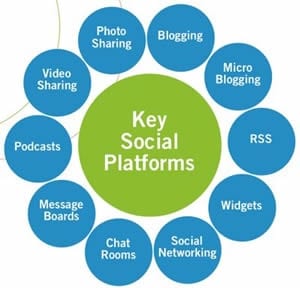
Harnessing the Collective Mind of Social Media to Drive Innovation
Social media networks make it possible to harness the ideas, information, knowledge, collaborations and passion of workers around innovation as never before, explains Colin Crabtree.
The Benefits of Pursuing Collaborative Innovation with Your Customer Advisory Board
Many organizations have committed to developing deeper intimacy with their most important clients by establishing customer advisory boards. The most compelling, worthwhile forms of engagement within this structure occur when board members and stakeholders from the sponsoring organization explore possibilities for helping one another realize their respective visions. In other words, they collaborate and innovate on what a shared future might offer. In this article community architect Doug Collins makes the case for supplementing the board meetings with a virtual community focused on collaborative innovation to improve the continuity of the dialogue and formation of the ideas that arise.
Four Points to Consider as the Business Sponsor of an Ideation Challenge
Your organization holds you accountable for the profit or loss of one of its brands, channels, or regions. Maybe you oversee the business as a whole. You have an opportunity to apply collaborative innovation as a means to engage a wide swath of colleagues on resolving a critical business question with you. Should you proceed? If you do proceed, what points should you keep in mind to ensure you make productive use of your time and the time of your community members? In this article, community architect Doug Collins covers the four critical points to consider as the potential business sponsor of an ideation challenge.

How to Implement R&D-Driven Open Innovation
Transforming your firm in R&D innovation approach from a closed to an open one promises huge benefits. Increased agility and effectiveness, lowered risk and revenue growth through new products are some of them. In this In-Depth Article Frank Mattes shows how a firm can find the best approach to R&D-driven Open Innovation (Outside-in) based on the insights from a number of projects in this space.