


Content Catalyst: An Awesome Creativity Tool for Writers
If you do any kind of writing and need a steady stream of compelling ideas for newsletters, presentations, blog posts, articles, books and other forms of written communication, you'll love Roger C. Parker's excellent Content Catalyst book.
Zappos Insights executive says execution of ideas is key
Robert Richman, Product Manager of Zappos Insights, says the most successful companies will be those that have people with the best ideas, and who can execute them most effectively.
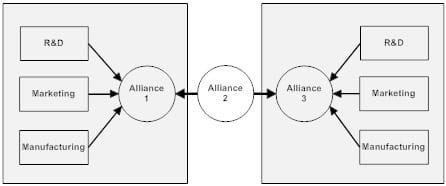
Why open innovation alliances fail
One of the reasons why open innovation is so hard to implement is because you must open up your internal innovation processes to another organization. According to one innovation expert, you actually need to manage three sets of relationships in any potential partnership, which explains why it's so hard to create a successful open innovation alliance.
How to find potential open innovation partners
The world if filled with incredibly smart people. If you can locate them and convince them to partner with you, they can help to drive your open innovation efforts forward. Stefan Lindegaard shares several strategies for making that happen.
Is open innovation over-hyped?
Open innovation has been hyped in the media and by some consulting firms over the past few years as the next new thing and is just giving a term to an activity that has been underway in business for a long time. Simply put, open innovation is partnering to gain leverage and build barriers to competition.
Government’s promising role in fostering open innovation
One key partner that has the potential to greatly affect and enhance the human condition is government. This author prefers the open market as the main catalyst for change, but given the complexity and scale of certain types of research, government can play a vital role in advancing knowledge in science and technology by supporting basic research. While some governments have been funding research for quite some time, the inefficiency of the process may be keeping new discoveries from being commercialized.

Is the Business Model of Management Consultancy Dead?
It is coming our way, and we had better be prepared and ready. What (probably rightly) began in the legal industry is hitting management consultancy: an outcry against paying by the hour and paying premium rates for consultants just out of business school. Let me be straight out: I am worried but excited! Worried because I foresee a market shift that will erode and potentially eradicate the business model of management consultancy as we know it today. Exited because we (the readers), through InnovationManagement, have the chance to innovate the business model!
Break the Rules to Reveal Innovation Opportunities
A creative exercise called 'break the rules' can help to illuminate the the number and level of restrictions on how you work. It can also be the basis for new ideas, according to Paul Sloane.

How to Avoid Open Innovation Failure
Make sure your internal innovation capabilities and processes are in order before you open up your idea and innovation strategy to the world.
Interplay of Innovation and Complexity
We hear often that smaller companies innovate better as they are more flexible, faster and creative as compared to larger organisations. This is all but half true. Its not the size of an organisation that decelerates the innovative pace-rather complexity. Hence organisations seeking sustainable growth need to find the balance between innovation and complexity.

Searching for Innovation Excellence
We all seem to want more innovation these days. But do we really know what we are searching for? Do we understand the true meaning of innovation? Or are we stuck in a paradigm that doesn’t fit the original meaning of the term? Find out more in this article by Per Frankelius, Ph.D., and Associate Professor at Örebro University.

The New Nature of Innovation Revealed
The paradigm of innovation as driven primarily by technology and science is passé. A new paradigm is emerging, with the publication of success stories of companies innovating through other ways. The Danish and Finnish governments jointly funded a study into the new nature of innovation, as a contribution to the OECD’s work on innovation strategy. Innovationmanagement.se asked the FORA team behind the report to present the highlights. FORA is a research and analysis division under the Danish Authority for Enterprise and Construction

Exovation – the flip side of innovation
"It is unlikely that you have ever met the concept of exovation before; I invented it in April 2008. Invented? Yes, indeed – even if a Google search obtains a couple hundred hits; but they have nothing to do with the concept as I have defined it. You will see, presently." Read more in this weeks´ column by Bengt-Arne Vedin, PhD and Professor emeritus in innovation management.
Collaboration is the New Hot Thing
Collaboration is the new hot thing. The idea is not new and one can trace its origins from the Silk route, to the old Italian Shipping cluster, to the Medicis, to the evolution of different industries, to the new age of globalisation to the new age we see today. However, we live in a business age with hype cycles and buzzwords serving as adrenalins. Everybody is talking collaboration. The new impetus has come because of three main reasons.
A Better Approach to Creative Problem Solving
If you're faced with a challenge, chances are that the solution is just a little outside of the focus of your conscious attention. Dr. Win Wenger takes a look at popular methods of creative problem solving, and suggests a unique solution to improve your approach to it.
Respect: A key ingredient for innovation
Respect is a key ingredient for building a long-term, sustainable innovation competence within any organization.
The Critical Role of Trust in the Innovation Process
The innovation process requires considerable amounts of trust. The innovation process involves risk both for the firm running the process and employees participating in the process. Jeffrey Baumgartner outlines some practical ways to increase the level of trust, and therefore the level of innovation, in your firm.

Organizing around the average is not a viable option any more, says Seth Godin
Organizing your firm around average performers used to be acceptable in the old world order, where companies hired automatons and attempted to profit from increased efficiencies and economies of scale. But it's no longer enough in the new world order, where a motivated, creative performer can generate 100x or 10,000x what they're paid. So says Seth Godin in his new book, Linchpin: Are You Indispensable?

Preparing for Tomorrow’s Innovations today
Being the General Manager of TomorrowLab, Steven Peleman knows what is important for the creation of innovation in companies and organizations. Bringing people together outside their companies and helping them to develop new views of their existing innovation organization make a good start. Getting them to take more chances is even better.
COP15: A Derailed Innovation Management Process
We have flipped the calendar and entered a new decade. It is a month since the closure of COP15, and we are still analysing results. Innovations were claimed to be the drivers required to reduce CO2-emissions. And, in this context, COP15 kicked off an innovation management process, involving heads of states, and a steering committee, and it was hoped would show the way to a better tomorrow. What went wrong and why did it go so wrong?
Design: A key differentiating factor for innovative products and services
Design is on the cusp of altering many of today's innovation practices and approaches. It is moving toward offering a business competency that innovators can no longer ignore.

Intelligent Tool to Create Food Innovation
In Denmark, new food trends are popping up like mushrooms. Consumers want climate-friendly, organic food that is locally produced. They want to be informed about calorie-content when they eat in restaurants, and they want ‘homemade’ food – cooked by someone else. These demands are producing a challenging environment for food producers, who often do not focus on developing the most appropriate products. However, change is underway. A new tool, Food Innovator, should help businesses to involve consumers in the development of new products.
The Innovative Leader Needs Passion
To mobilize your workers to support innovation, you can't just tell them to be passionate. You must model passion every time you speak, instructs Paul Sloane.

Standards for Innovation Management – a Helpful Tool?
To promote innovation is a key issue at political, economical and professional levels and has become a critical effort across Europe. That´s why 13 European countries are currently collaborating to create a European standard that will provide guidance and good practices to beginners as well as a systematic method to strongly innovative companies. InnovationManagement.se asked Fernando J. Utrilla, Secretary of the committee about the work in progress.