

Financial Innovation and its Undeniable Role in Society
Innovation in the area of financial services has undergone increased criticism since the start of the difficulties in international banking. This has fueled a general negative perception of innovation in financial services. In this article Dr. Anne-Laure Mention argues that innovation is not something to be feared as such, actually it is a driver of competitiveness and that the full benefits for society might not yet be visible.
Creativity: Start from Scratch Conceptually
Business, governments and individuals can easily become bogged down by procedures and processes that harm efficiency and kill innovation. The obvious solution is to start from scratch. Here's how to do it, according to Jeffrey Baumgartner.
Product Development: Do you Know what you Really Need?
Product development requirements often change in the course of a project, sometimes for the most arbitrary of reasons. Too often, the executives who ask for these "tweaks" fail to understand the significant ripple effects these changes can cause in terms of manpower, resource allocation and time, warns Michael Fruhling.
Get Innovative in Helping Employees to Accommodate Change
You can find in this article a grasp overview of reasons for change in our organization and how it could be boosted by applying innovative approaches.
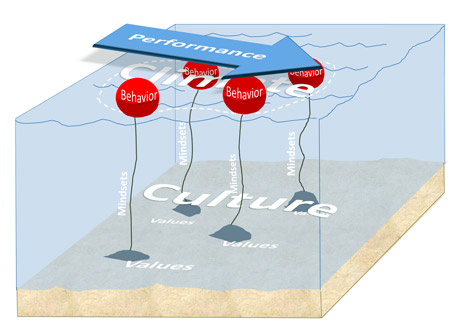
How to Change Innovation Culture the Fast & Viral Way
There are different approaches to facilitating cultural change within an organization in order to promote innovation. Bengt Järrehult argues that the viral change, whereby successful changes are achieved through experimentation and then spread by different groups copying or adopting the change leads to faster and more long-lasting culture change.
Global Paradigm Change
The world is changing rapidly and fundamentally. Among other things, this means that business as usual is no longer an option. Far-sighted leaders know this, and are already adopting new purposes for their organisations that reflect the need to be kinder to society and the planet. Although this shift builds on concepts such as the triple bottom line, it goes far beyond this: first, it is about transformation, i.e. deep systemic change, rather than reformation, trying to make current outdated systems work better; and second, it will involve significant changes in our own personal beliefs, mindsets and behaviours.
Finding Time, a Scarce and Necessary Resource
Browsing through these paragraphs will take you approximately two minutes. If you read them more carefully, four perhaps. Not a lot of time or investment. In this blog Susanna Bill reminds us why time is key for innovation and organizational change.
Social Product Innovation Challenges: Sustaining Processes
A couple months ago I laid out the framework for the most common challenges companies face as they get started with their social product innovation initiatives. The most common challenges fall into five main buckets – strategy, people and culture, business processes, technology and sustainability. So let’s take a deeper look at typical sustainability challenges and some ideas for overcoming them.
6 steps on How to Achieve Innovation in Outsourcing
There has been a huge amount of growth in the outsourcing industry over recent years, so much so that it has become engrained in the way many large enterprises run their business. As the industry matures and the range of outsourcing services extends to higher value activities, client firms raise the bar regarding their expectations, seeking the delivery of high impact innovation from their vendors.
Engaging Collaborative Innovation’s Losers
Change benefits some more than others. The practice of collaborative innovation, which by design offers transformative change, is no different. In this article innovation architect Doug Collins advises campaign teams on engaging people who find themselves on the losing end of the practice. Ignoring their concerns jeopardizes the initiative.

The Elastic Enterprise: How to Move Beyond Innovation (and Live Happily for a Change)
Innovation, the act of creating novelty, has become omnipresent whereas what we really need to know is how to change enterprises, how to transform them, how to make them Elastic Enterprises, urges Haydn Shaughnessy in this provocative article.
Learning from Asian Innovation
Asian companies are different from Western companies in their approach to innovation. A recent study has identified four generic elements of the Asian approach that might help any Western company think differently and to be more effective in their business creation. In this article Peter Hesseldahl gives a brief overview of the conclusions.

The Great Innovation Challenge of the 21st Century
Global economic challenges that have had a profound affect on businesses will continue to do so indefinitely. This means that businesses must not only innovate in order to survive, but they will need to innovate in new ways to meet the changing needs, expectations and financial situations of their customers.
Is it Time to Rewrite the Innovation Playbook: Ten New Requirements in the Age of Hyperinnovation
In the world of hyperinnovation innovation itself is changing. In place of a monolithic R&D based innovation culture we suddenly have a proliferation of innovation approaches and new pressures on enterprises to innovate. Haydn Shaughnessy and Nick Vitalari argue the innovation playbook needs to be rewritten, and relabelled.
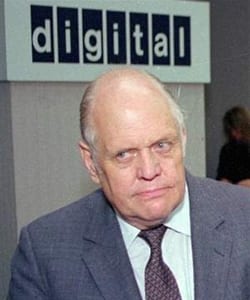
When DEC was the King of Innovation
At one time, Digital Equipment Corporation (DEC) was one of the most innovative companies on the planet. What happened?
Structuring Companies for Innovation and Operations
The appropriate structuring of companies is becoming more and more relevant as a mechanism for managing and enhancing their innovation capability. This article explores the concept of the Viable Systems Model (VSM) of Stafford Beer as a tool to better structure organisations for effective innovation and efficient operation.
Complexity Science and Innovation
What has complexity science to do with innovation management? Quite a few things if you ask Dr. Curt Lindberg of Plexus Institute, NJ, the States. Complexity science is the scientific study of complex systems, systems with many parts that interact to produce patterns of behavior that cannot easily be explained by the behavior of the individual constituent elements. From a business perspective you can use it to better understand the importance of relationships and interactions to your innovation efforts.
Improvisation is key to building a culture of innovation, says Doug Stevenson
By adopting the behaviors and principles of improvisation, organizations can achieve significant and robust cultural change in the direction of innovation, says creativity and improv expert Doug Stevenson.
Innovation and Change: What are you afraid of?
Fear of change can make people resist the best of ideas. Keep this in mind when you innovate!
Reinventing Knowledge Management to Innovate
There has been a shift from the emphasis on what people called the “information value chain” to “knowledge value chain” for quite some time. The environments are shrewd and unpredictable in this world of growing competition and rapid technological progress. The information value chain just served as a database of “best practices” whereas “knowledge value chain” emphasizes on the active sense making of human beings handling business.

Preparing for Tomorrow’s Innovations today
Being the General Manager of TomorrowLab, Steven Peleman knows what is important for the creation of innovation in companies and organizations. Bringing people together outside their companies and helping them to develop new views of their existing innovation organization make a good start. Getting them to take more chances is even better.

Challenges for Innovation in Network Markets
Markets can be quite hostile to new products launched, and in fact they refuse most new products. This hostility to new products can even be stronger in network markets, where all players are interconnected. Read more about the challenges to be addressed when you enter into network markets in this third article in a series of five by Gunjan Bhardwaj, head of Ernst & Young´s Global Business Performance Think-tank.
When no one wants to change: 6 questions that lower the defenses to improving innovation
Why is change so hard? Most people will tell you that it’s because people naturally resist change. I really like Eli Goldratt’s response to this argument: If a very wealthy person that you knew and [...]

To Re-invent Your Company, Reinvent Yourself
Companies are increasingly recognizing that today’s turbulent times require nothing short of continual reinvention. Weathering today’s storm isn’t enough. Companies need to develop repeatable processes that regularly renew their firms before the next crisis hits. This kind of renewal must begin with the leaders themselves.