

Technology Helping to Prevent Falls
Embedded intelligence and sensors are set to revolutionise many aspects of healthcare and support for older people. Some of those technologies, which are wearable, ingestible, responsive and communicative, herald significant changes and benefits ahead, and could reduce the growing costs of falls among older people.
Financial Innovation and its Undeniable Role in Society
Innovation in the area of financial services has undergone increased criticism since the start of the difficulties in international banking. This has fueled a general negative perception of innovation in financial services. In this article Dr. Anne-Laure Mention argues that innovation is not something to be feared as such, actually it is a driver of competitiveness and that the full benefits for society might not yet be visible.
Core Competence Management in the Era of Open Innovation
“Core competences” are a major concept in managing innovations and technologies. In the era of Open Innovation, the established concept of core competence management needs to be updated. innovation-3’s Frank Mattes recently met with a group of 20 innovation / technology managers from leading firms to work out how this could be done – with the practitioner’s perspective in mind. In this article you will find the key results of the discussion.
Open Innovation: Colgate’s Sensible External Partnership Approach
Ken Klimpel, Colgate Palmolive's Worldwide Director of External Innovation and Outreach shares his perspective on some aspects of the approach he and his company take to drive their open innovation successes.
Every Day Innovation: Where Have you Experienced it?
Innovation can comes from every corner of every day life: the last great novel you read; the cereal package that was easy to open; the microwave dinner that didn't suck; the next use of air and balls from Dyson; the machine that made your coffee; the noteworthy car rental experience in Indianapolis. What recent experiences inspired you?
Demystifying the Path to Technology Partnerships
There is often a considerable amount of ambiguity at the outset of open innovation partnerships. Quite often, the technology customer is considerably larger than the provider and is being pursued versus being the pursuer. The technology provider almost never knows the full extent of what needs to be demonstrated in order to earn a customer's business commitment. They are also quite often reluctant to ask so as to avoid offending the other party or seeming ignorant or unsophisticated. How can this situation be improved?
A promising Approach to Finding Technology Solutions: Supplier Summits
Given the relatively small number of qualified solution providers for any given technical challenge, one fairly productive and successful problem solving approach undertaken by corporate technology seekers is to organize "supplier summits."
The Potentially High Cost of not Implementing an Idea
Many managers are very good at working out the cost of implementing an idea. But they often completely fail to calculate the cost of NOT implementing it. This may sometimes be far more expensive than implementing it, especially over the long term, warns Jeffrey Baumgartner.
Breaking Language Barriers
Learning a foreign language is exceedingly difficult for many people, but digital technology is making modest translations of text and voice faster, easier, and more accessible. Machine translators (MT) have been around for years, but the level of availability and their quality continue to rise. They promise to cost-effectively unite the world even more than before with a variety of applications from tourism and social collaboration to business and politics.

Material Disruption Ahead
New materials and processes are proving effective against a growing range of bacteria and have wide ranging applications. Similar approaches may also change the way we clean our clothes and how often we paint our houses. They could also prove disruptive to existing sectors’ income streams.
How to Get Rid of Old Ideas?
Have you participated in a brainstorming session that felt like wasted time? For some reason no new and interesting ideas were formed? Perhaps you need to get rid of your old ideas first! Gis van Wulfen explains.
Resilience Rules
Western societies and the systems we depend on to make them function are becoming ever more complex. As a result, they are also becoming more vulnerable to catastrophic, systemic failure. As individuals, communities and societies we may, at the same time, be becoming less able to cope with such events as we lose basic skills, families are more scattered and communities less connected.
Product Innovation: Unifying People, Processes and Tools
Product innovation is not simply about generating new ideas. It is a complex process, and many organizations struggle with the design and implementation of an effective innovation strategy that yields measurable results over the long-term. Sustained growth and profitability can be achieved through the integration of three critical levels: People, processes and tools.
Learning by Doing
New forms of learning by doing seem to be emerging. Technology could play a role in finding innovative ways to enable skills development and greater understanding of personal actions, reactions and decisions.
How Human Behavior Can Skew Innovation
A variety of human group behaviors can undermine innovation. For best results, we need to be aware of them and mitigate those that can derail innovation efforts.
How to Make Open Innovation More Open
Here are some common-sense suggestions to improve everyone's experience when implementing open innovation initiatives.
Mobilising Health Apps
Mobile health apps are set to change the way individuals can look after their health, doctors can diagnose and monitor patients, and medical research can collect data and develop their research. As health apps go from ‘dumb’, i.e. use only aggregated or limited personal data to intelligent using personalised health records and genetic data, a revolution may be underway.
Innovating with Bug Power
Clean water and clean power, especially in remote areas of Africa and other developing nations, are critical challenges. One piece of technology, Microbial Fuel Cells, (MFCs) could help address both problems, and bring the additional benefits of mobile communications - changing the lives of millions. In one incarnation, it might also reduce the scourge of malaria.
Managing Trade-offs Effectively when Adopting External Innovations
Most companies don't think through the trade-off between utilizing an external innovation as is versus customizing it nearly enough. As a result, they tend to suffer in time to market.
Regulating Nano: Tiny Particles, Huge Questions
It is a difficult time for regulators trying to make sense of nanotechnologies, the engineering of super-small particles to utilize their size and unusual properties. While environmental, health, and safety (EHS) concerns abound, so too do the technological and economic benefits which extend particularly to the electronics, green tech, and health industries. As regulators seek to protect the populace, they also need to avoid undue public backlash which could damage these huge benefits because of poor communication and limited scientific research.
Richard Li-Hua on Innovation in China
China’s ambition of become an innovation-oriented country by 2020 is an important part of the nation’s long-term strategic plan. Being the second largest science and technology thesis producer, and running the second largest economy next to the US, a lot of things are happening in China. Innovation Management spoke to Professor Richard Li-Hua, word-leading expert on innovation about his thoughts on China’s innovation.

Try Before You Buy – Virtually
Clothes buying, both in-store and online, is set to change with help from interactive and virtual assistants. Interactive mirrors, virtual changing rooms, a personalised fitting service and a mobile app all aim to help consumers find the clothes and the look they want more easily. They may also reduce costs for online retailers and help them reach new customers.
Insource Innovation to Generate Better Ideas & Fuel Product Pipelines
Is innovation a numbers game? We’ve all heard the statistics around the number of ideas it takes to eventually lead to a single successful product. But if we look at why it takes 3000 to 6000 or more ideas to find a single winning concept, the answer becomes fairly obvious: not every idea is a good idea. Mark Atkins explores how we can create better ideas, not more ideas.
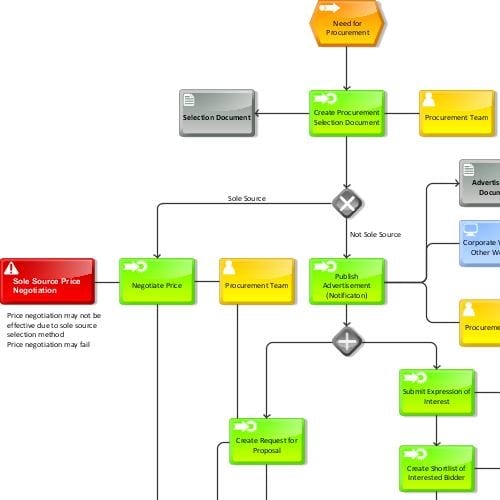
Business Processes Innovation
This article provides a reflexion on how employees innovative mindset could benefit corporation business processes, hence, their results