

How to Harness the Value of Outsourcing-led Innovation
Companies who are engaged in developing innovation processes are also likely to be involved in outsourcing significant aspects of their operations. So how do you innovate when you've also outsourced? Sanjiv Gossain explores the issues.
Eric Von Hippel on Innovation: Rethinking the User as Innovator
Eric Von Hippel has long been an advocate of user-led innovation but it is not always clear what user-led innovation really means. A newly released study on consumer innovation by Von Hippel reveals more than you might think. Haydn Shaughnessy delves deeper..
Identifying and Exploiting New Markets in Growing Economies
The importance of new markets to growth can’t be overstated. But emerged, emerging and frontier markets are not just about growth. They are a perfect opportunity to extend our innovation capabilities. IM takes a look at the lessons of India as a product frontier.
Changing Mental Models to Make Innovation Work
We see a lot of programs being run in companies in the name of innovation. Of course some of the large corporations need to run innovation programs for name sake. They need some window dressing for analysts and industry observers lambasting the same for not being innovative enough.

Learning How to Use Design Thinking
Thinking like a designer can transform the way you develop products, services, processes and even strategy, according to Tim Brown, CEO of IDEO. But what is design thinking? This topic was explored by 70 people in a workshop hosted by PIEp, a Swedish academia-based nationwide initiative to increase innovation capability in organizations.
Students Innovating for Emerging Markets
Existing technologies, such as telecommunications, are often designed for the developed world. But an innovative focus is also urgently needed to address issues in developing countries. This is something that the Royal Institute of Technology, KTH, has acted upon and is sending students to Africa with the purpose to identify needs and develop innovative solutions. Read more in this interview with Professor Margareta Norell Bergendahl.
The Need for a New Product Development Process
This is the third part in a series of articles that take the need of innovation under the loop and share some of the imperatives, must haves if you will, to create and sustain “NEW” in business or organizations. This article focuses on the new product developing process.

Achieving Success in the Fuzzy Front End Phase of Innovation
Activities in the front end of the innovation process are often difficult to anticipate, overview and perform. Yet they are critical to successful outcomes of the innovation process. In light of a growing managerial interest in the front end, this article identifies key success factors for managing the front end, balancing acts which innovation managers need to address, as well as key contingencies affecting front end activities. Proficiency in the front end is indeed no easy task, but will have an enormous positive impact on performance for those firms that succeed.
Structuring Companies for Innovation and Operations
The appropriate structuring of companies is becoming more and more relevant as a mechanism for managing and enhancing their innovation capability. This article explores the concept of the Viable Systems Model (VSM) of Stafford Beer as a tool to better structure organisations for effective innovation and efficient operation.
From Science to Business – How Firms Create Value by Partnering with Universities
In today’s “knowledge-based” society, it is becoming increasingly imperative for companies to “mine” knowledge and technology generated by universities. Why? Because the outcome of such industry-university collaborations help companies create new activities and jobs.

10 Steps for Boosting your Firm’s Innovation
Here are 10 steps you can take to turn your company into an innovation leader that races forwardswith new products, services and improved processes while your competitors remain far behind with outdated products, limited services and inefficient processes.
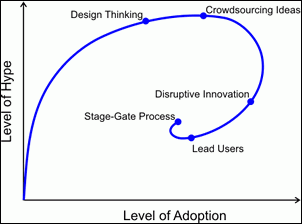
The Innovation Hype Cycle
According to the Gartner Hype Cycle model, media coverage of a new technology goes through five distinct phases. Graham Horton has discovered that the way media treats innovation follows a similar pattern.
Ecosystems and the formal process of ad hoc innovation
Look at an example like Nokia and you can see the mobile device and services giant rapidly evolving different types of ecosystems around its devices, services and solutions – these are all ad hoc innovation platforms or ways to introduce the unplanned into corporate strategy. Ad hoc innovation is extremely important but a poorly understood element of change. Yet companies have been evolving complex ad hoc innovation systems for perhaps the past three years.
Cluster and Eco -System: Formal and Informal Approaches to Innovation
During the 1980s it became apparent to European policy makers that the twin titans of innovation, at the time, the USA and Japan, were better at innovating than were European firms. Or rather Europeans could invent but struggled to get to market.
Public Sector Innovation: An immense opportunity
Most Western European countries are struggling with fundamental, long term issues, e.g. an ageing workforce; downward pressure on public sector budgets and increasing demands from citizens, to which Danish learning could be applied.

The Basics of Creative Problem Solving – CPS
Creative problem solving isn't just brainstorming, although that's what many people may associate it with. It's actually a well-defined process that can help you from problem definition to implementing solutions, according to Jeffrey Baumgartner.
Improvisation is key to building a culture of innovation, says Doug Stevenson
By adopting the behaviors and principles of improvisation, organizations can achieve significant and robust cultural change in the direction of innovation, says creativity and improv expert Doug Stevenson.
Achieving Competitive Advantage by Observing First Movers
‘Early adopters’, ‘trendsetters’, ‘opinion leaders’, ‘first movers’ - are the labels describing those who are ahead of the mainstream, who are keen to try out new things. But do these terms describe the same attributes – or are there subtle differences? If so, what is the difference and how can companies proactively incorporate using these groups and their insight into their innovation management process.

Successful Approach for Improving Innovation Management for SMEs
It's a well known fact that Europe's competitive potential is dependent on the capacity to be truly innovative and creative in launching new successful products and services. This can be a daunting challenge for many organizations, not the least for small and medium sized enterprises that often lack proficiency in innovation management. IMP³rove is an approach developed especially to meet the needs of SMEs to help them develop innovation management performance with sustainable impact.

Web-Enabled Open Innovation: From Hype to Reality
InnovationManagemenet is proud to present yet another experienced and knowledgeable columnist; Ehsan Ehsani, researcher and consultant in the area of innovation and product development. Ehsan is working with Accenture Product Innovation and PLM practice in New York City Office and has previous experience from a variety of firms both in Europe and the United States. This is the first in a series of columns starting off with a hot topic: Web-enabled open innovation.
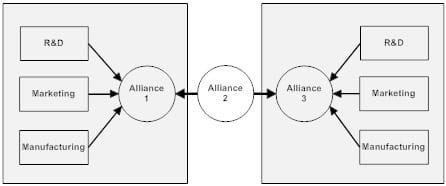
Why open innovation alliances fail
One of the reasons why open innovation is so hard to implement is because you must open up your internal innovation processes to another organization. According to one innovation expert, you actually need to manage three sets of relationships in any potential partnership, which explains why it's so hard to create a successful open innovation alliance.

Searching for Innovation Excellence
We all seem to want more innovation these days. But do we really know what we are searching for? Do we understand the true meaning of innovation? Or are we stuck in a paradigm that doesn’t fit the original meaning of the term? Find out more in this article by Per Frankelius, Ph.D., and Associate Professor at Örebro University.
The Critical Role of Trust in the Innovation Process
The innovation process requires considerable amounts of trust. The innovation process involves risk both for the firm running the process and employees participating in the process. Jeffrey Baumgartner outlines some practical ways to increase the level of trust, and therefore the level of innovation, in your firm.

Intelligent Tool to Create Food Innovation
In Denmark, new food trends are popping up like mushrooms. Consumers want climate-friendly, organic food that is locally produced. They want to be informed about calorie-content when they eat in restaurants, and they want ‘homemade’ food – cooked by someone else. These demands are producing a challenging environment for food producers, who often do not focus on developing the most appropriate products. However, change is underway. A new tool, Food Innovator, should help businesses to involve consumers in the development of new products.