


A Profile of Open Innovation Managers in Multinational Companies
Open innovation is widely used in large companies and we know increasingly more about how to manage this process. In contrast, we know virtually nothing about the managers and practitioners who are driving open innovation in large companies. Who are the managers operating in open innovation teams or units? What is their profile? How long do they stay in an open innovation job, and what is their tenure in the company? This report tries to answer these questions based on an investigation of open innovation managers on LinkedIn.

6 Pitfalls to Avoid in Innovation Development
Before investing in your company’s innovation development, it’s important to develop a strategy for collecting and evaluating ideas. Having guidelines in place to thoroughly vet ideas, value diverse opinions, prioritize scalable and sustainable results, and other areas of innovation management can set you up for success over the long term.
Transferring Innovation Skills to Newbies: Fact or Fiction?
Expert innovators know from experience how to innovate while minimizing hassle, needless tasks and wasted effort – they’ve been successful (and unsuccessful) countless times through trial and error. Using flight simulators and surgical learning tools as examples, it’s been proven that teaching veteran skills to ‘newbies’ isn’t science-fiction, especially in more ‘exact’ disciplines such as medicine and math. But is it possible to design a crash-course that teaches young and inexperienced innovators the less-definable skills, attitudes and insights necessary to ideate, champion and implement without having to go through all the awkwardness of being a rookie? We think so, and here’s why.
Innovation Leaders Report Summary 2016/17: Trends and Leaders in Innovation Worldwide
Innovation Leaders has released its annual report detailing companies across 25 different sectors worldwide that accomplish the most from innovative activities. This year, Innovation Leaders highlighted three trends in its analysis: US dominance, partnerships and collaboration, and the impact of big bets and bold moves to deliver tangible, sustained growth.

The Benefits of Experiential Learning for Leaders with Rocket Scientist Joshua Spodek
In this podcast, Joshua Spodek discusses his journey from PhD student of astrophysics to launching and failing in the business world, and finally becoming a sought-after leadership coach and professor at NYU. He also touches on practical tools and exercises used to build the leadership muscles, and explores the importance of experiential learning or project-based learning for building leadership and personal skills.

Writing Proposals: A Handbook of What Makes Your Project Right For Funding
Whether you are a startup, researcher or consultant, at some point you may find yourself in a situation where you need to write a proposal for funding. Preparing proposals is a detailed process that takes lots of precious time and if you’re not familiar with the best practices for writing them, I dare say you may be wasting your time.

The Eight Attributes of Bottom-Up Innovation Leaders
Bottom-up innovation is fueled by many ideas initiated by employees, as opposed to top-down innovation, which is fueled by a strong vision - often by the company’s founder. Bottom-up innovation leaders are entrepreneurial, supported by management’s emphasis on creativity and a can-do culture, and often share these eight attributes.
Intrapreneurial Success: Leading Disruption, Managing Change
Embracing an intrapreneurial mindset, which intentionally disrupts things from the inside out and often from the bottom up, is a radical concept for companies that thrive on stability and predictability. However, if an enterprise is committed to developing its innovation capability through intrapreneurship, three groups of people must be mobilized to make it happen: leadership, stakeholders, and innovation support.
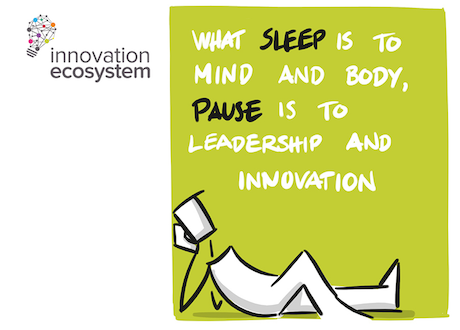
Exploring the Power of Pause with Leadership Thought-Leader & Korn Ferry Senior Partner Kevin Cashman
In today’s episode of the Innovation Ecosystem podcast, Kevin Cashman discusses with Mark the rationale and research behind "The Pause Principle," which aligns strongly with the notion of “creating space” explored by previous guests like David Allen, Lisa Bodell and Heiko Fischer, among others; about Kevin’s new interest in the concept of “story mastery”; and finally some fresh insights into the qualities of a great versus a good leader.

How Employee Diversity Promotes Business Innovation
Lack of diversity among employees hurts a company’s ability to innovate and remain competitive. Diversity - both inherent and acquired - naturally drives innovation through team members’ different abilities to spot gaps, solutions, and opportunities; to avoid groupthink; and to reach clients and customers who were inaccessible before.
Making Innovation More of a Science And Less of an Art
One of the greatest challenges facing innovation professionals is to find the right approach to a given innovation problem. Whether that’s instilling the innovation mojo in a large corporation or simply helping teams become more innovative, the ways to do this seem to be more of an art than a science. However, during the last ten years there has been a strong push to turn this art form into more of a science.

5 Reasons Sustainability Drives Innovation
Sustainability is one of the key emerging trends in recent years. But much like innovation, it is a maturing discipline with few established business practices and lots of evolving methodologies. Sustainability champions at organizations often face the same challenges that innovation champions do: lack of senior level buy-in, lack of process, lack of resources. The benefits of successful sustainability and successful innovation are similar, as well: a competitive advantage, improved profit margins, and better brand sentiment from employees and customers.

Democratising Elite Performance Tools with Dr. Andy Walshe
Currently leading Human Performance for Red Bull, Andy works with hundreds of international athletes and business leaders to develop and implement elite performance models. In today’s podcast, Andy and Mark sit down to discuss the intricacies of human potential and how certain qualities of elite performers resonate across sectors, industries and arenas; how companies can evolve to enable more talented employees to excel and his project Human 2.0 which looks at how new technologies especially in the arena of Artificial Intelligence encourage us to explore our own potential at a much higher level.

Using Design Thinking to make your employees ready for the Internet-of-Things
Recent advances in technology put Internet-of-things (IoT)-innovation on top of the management agenda across industries. It is predicted to increase economic value by $11.1 trillion in 2025 (McKinsey 2015). The Service Science Factory and Noventum collaborated on this article to present a state-of-the art view on the Internet of Things and how to implement this vision within organizations.
The Catalyst Network: Expanding the Reach and Impact of your Innovation Team
To amplify your company's presence and scale your influence, innovation teams need to harness informal networks and not simply rely on formal structures to create a thriving innovation eco-system. Enter Innovation Catalysts: natural champions who are believers, idea generators, problem solvers, mentors and sponsors in your organization.
How to Make Your Design Thinking Program Turn Into Something Real
Why do a large part of the design thinking projects in the corporate world never pass through the prototype phase? In recent years I’ve been involved with many design thinking initiatives. Many of them related to the development of new products inside large companies in industries such as finance, health, education and consumer goods.
10 Skills You Need to Nurture in Your Innovation Group
Organizational innovation requires discipline. And like any other discipline, it requires monitoring and training to make sure that you’re on the cutting edge of your capabilities. But what skills should you focus on building and how can you track your progress?

Talking 100% Entrepreneurship & 0% Bureaucracy with Heiko Fischer of Resourceful Humans
What do Europe’s most innovative video games company, a US Navy Submarine Captain and Hewlett-Packard have in common? The answer – autonomy, transparency, simplicity and entrepreneurship. Oh and Heiko Fischer! In this episode, sponsored by a-connect, Heiko and Mark discuss how the RH way came into being through Heiko’s time at Crytek, how the core principles behind the RH philosophy “100% entrepreneurship, 0% bureaucracy” work in practice, and how gamification in the workplace can help us solve the problem of unproductive meetings (among other things).
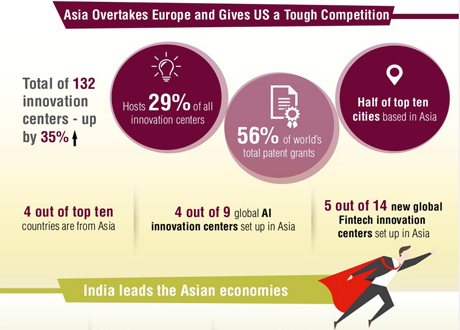
Are Corporate Innovation Centers The Last Hope for Companies Too Big To Fail?
Companies once deemed “too big to fail” are increasingly exposed to failure. The threat of disruption is everywhere. Startups are taking on the Goliaths in every market. Scores of malls across the United States are in collapse. Many household brand names are losing ground or even shutting completely. Regardless of industry, businesses face digital Darwinism, the evolution of technology and markets. Disruption is just a matter of when, where and why. To compete, executives must make tough decisions but more so, they must look to new horizons for new insight and direction. Whether companies thrive or cower in the face of digital Darwinism is a choice.
How Business Intelligence Software can Help you Increase Operational Efficiency
Business Intelligence software is an essential tool for analyzing your company's strengths and weaknesses. From inventory management, to accounting, to customer intelligence and beyond, there are many ways you can use BI software to inform your decision-making, increase operational efficiency, and gain a competitive edge.
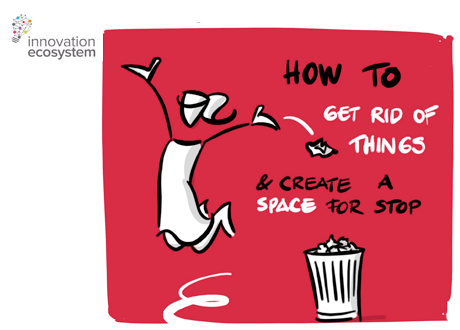
Cutting Complexity with Lisa Bodell of Futurethink
In this episode, Lisa and Mark reconvene to share more essential tools for leaders and teams to simplify their work environment from her second book, Why Simple Wins, they explore insights into how companies like SAP, Southwest Airlines and Syngenta are putting simplification principles into action. Join us to learn how simplicity can give you and your organisation the competitive edge of our time!
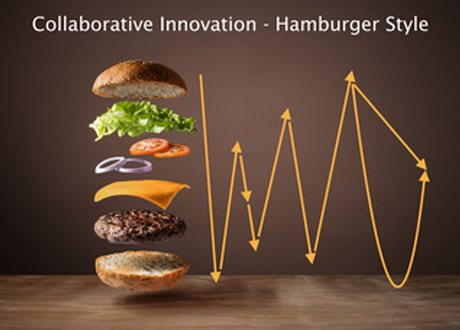
Collaborative Innovation – Hamburger Style
Often I read articles or books about top-down vs. bottom-up innovation and why one approach would be better than the other. After spending more than five years in the collaborative innovation space, I would advise going hamburger style!

The Future of Civic Engagement and Innovation
Numerous leaders and community organizers have been talking about public service lately, especially in the US - mostly encouraging the public to take place in ongoing dialogues and to volunteer in their communities in order to create positive change at local and national levels.

The Frustrated Innovation Team: What Should They Do?
Many executives talk a lot about innovation, but they don't really know how to make it happen. A corporate innovation team asks themselves: How do we "educate" our executives on innovation management and develop stronger corporate innovation capabilities together?